 since 2006
By the numbers: if you had invested $1,000
5 years ago
$132
from Oct 2021 · -33% a year on average
10 years ago
$30 620
from Oct 2016 · +41% a year on average
Entire listed history
$4 172
from Mar 2012 · +10% a year on average
Deepest drawdown
-95%
from the Oct 2014 peak to May 2017
Now vs. peak
-90%
Nov 2022
Price history — log scale: equal height means equal percentage change
Numbers on the chart match events in the timeline.
Based on monthly closes with dividends reinvested (source: Yahoo Finance, ENPH). Past performance does not guarantee future results.
A stock worth less than a dollar
Summer 2017. Shares of Enphase Energy, a California solar company, have traded below one dollar for four months. At the end of June Nasdaq warns the company: if the price stays this low, the stock will be delisted. The company is still losing money and has already laid off a large part of its staff. Investors who bought at $6 five years earlier have lost about 90% of their money.
Now fast-forward. In December 2022 the same stock was worth about $340. Compared with the May 2017 low of about $0.65, that is roughly 500 times. In five and a half years. Even over a shorter stretch the number is staggering: from the end of 2018 to the end of 2020 — two years — the stock rose about 37-fold.
Along the way the company joined the index of America's 500 largest companies, the S&P 500.
But the story does not end there. Over the next three years the stock fell about 92% from its peak, and in 2025 it was removed from the S&P 500.
How does a company go from near-death to a several-hundred-fold gain and then back into a deep crash? To understand that, we first need to know what Enphase sells.
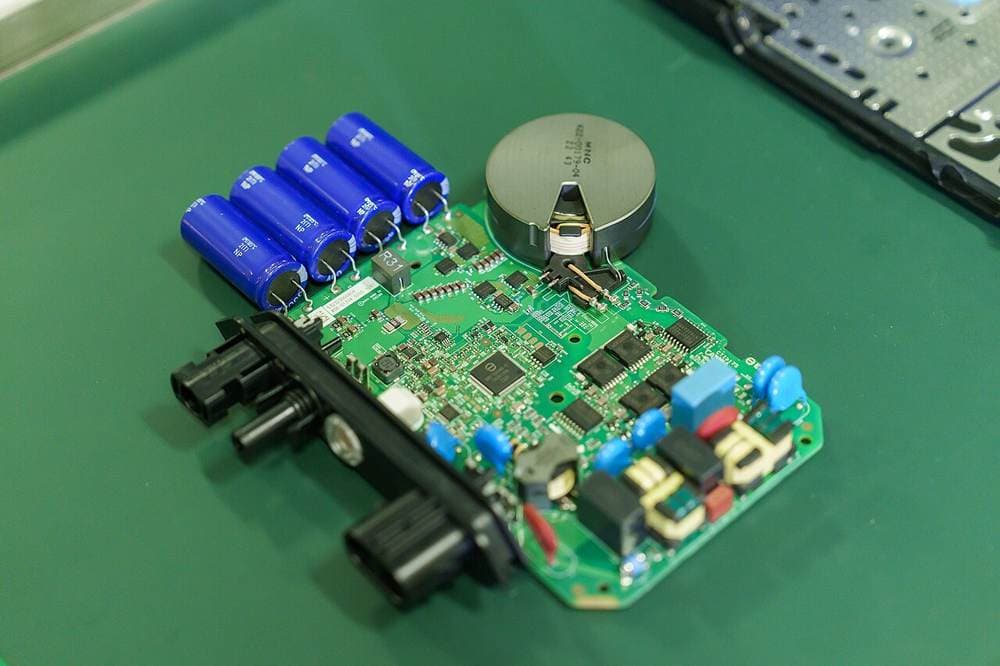
A "brain" for every panel
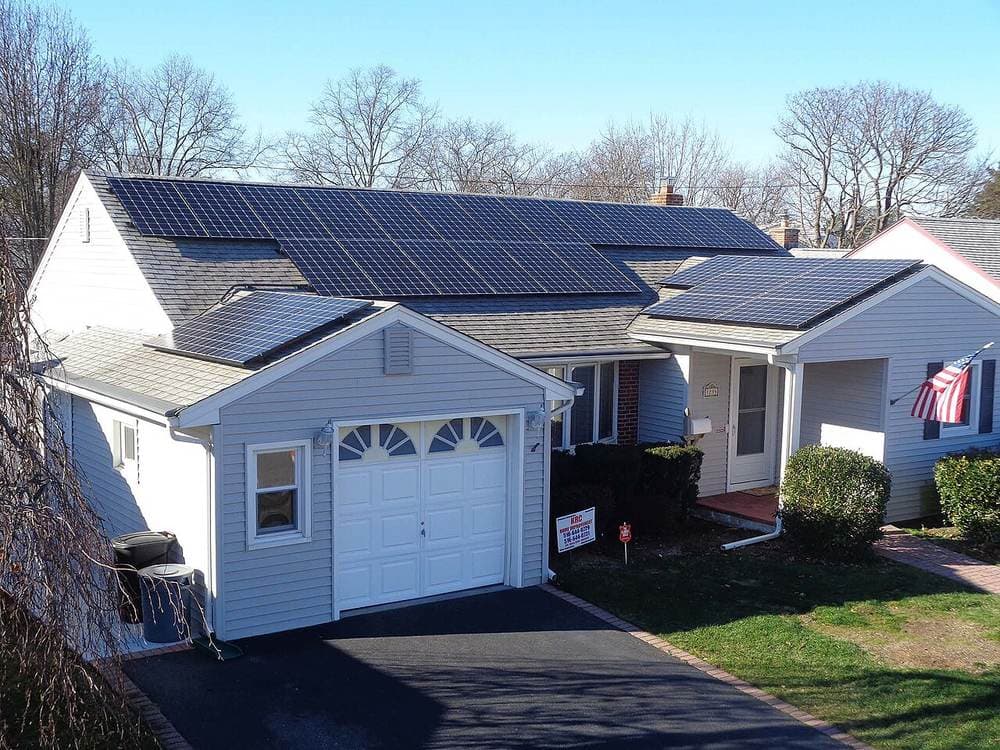
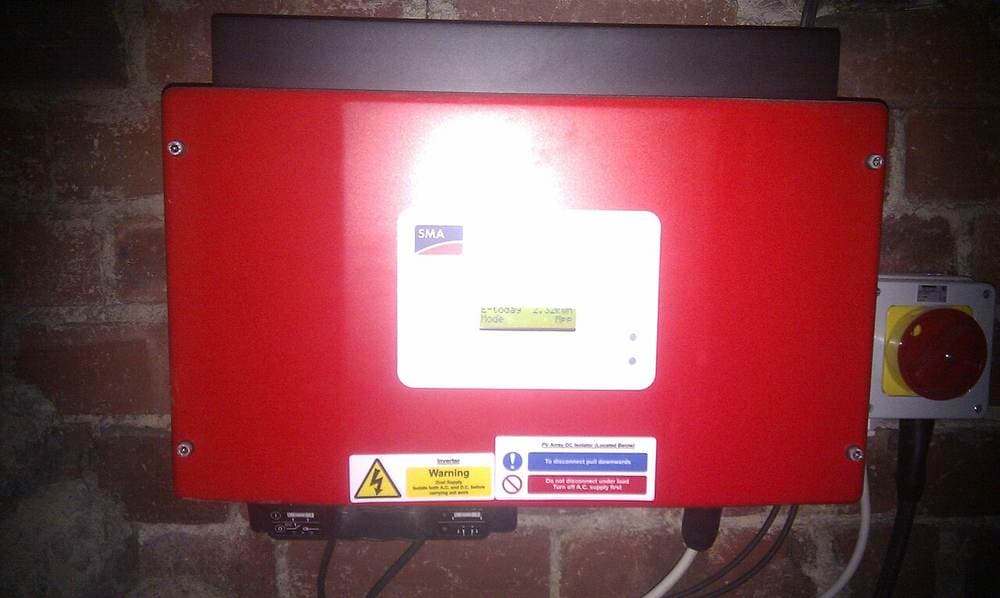
A solar panel produces direct current (DC), while your home's outlets and the power grid run on alternating current (AC). To connect the two you need an inverter.
The traditional way is a single large inverter that handles all the panels on a roof as one series-connected chain, or "string". The problem is that if one panel in the string is shaded or underperforms, the output of the whole string drops — like an old string of holiday lights.
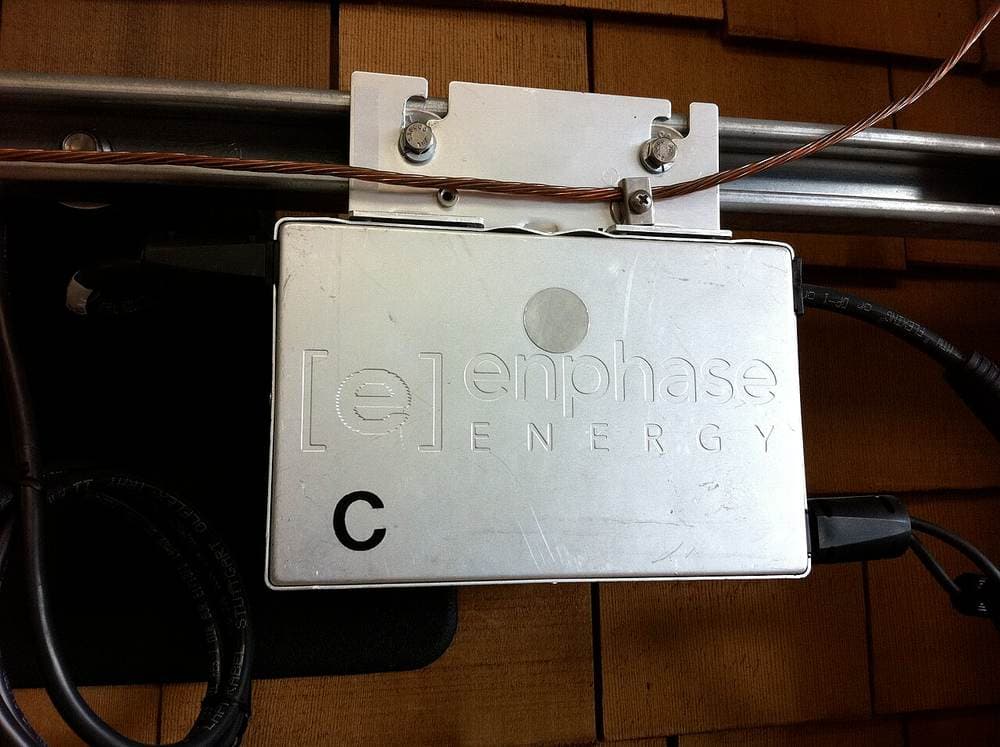
In 2006 two engineers — Raghu Belur and Martin Fornage — pushed a different idea: put a small inverter of its own — a microinverter — behind every panel. That way each panel works independently: if one is shaded, the rest still deliver full power. Microinverters also usually carry longer warranties. The drawback is price: as of 2018 a microinverter cost about $0.34 per watt, versus about $0.13 for a central inverter.
In 2008 Enphase released its first microinverter, the M175 — considered the first commercially successful microinverter. By mid-2010 the company held 13% of the U.S. residential market. In March 2012 Enphase listed on Nasdaq at $6 a share, and in September 2014 the stock peaked near $17.
Then everything went into reverse.
"An existential threat"
2016 was Enphase's hardest year. The CEO later described it openly in a letter to shareholders as "an existential threat."
The numbers back that up. Revenue fell from $323 million in 2016 to $286 million in 2017. The company cut staff in two large rounds — from roughly 500 positions to 350. In 2017 the operating loss was $39 million. The stock traded below a dollar for about four months in the spring and summer of 2017, and at the end of June the company faced the threat of Nasdaq delisting.
But in exactly this dark period two important things happened.
First, in January 2017 semiconductor veteran T.J. Rodgers, founder of Cypress Semiconductor, invested $5 million in Enphase stock.
Second, in September 2017 longtime CEO Paul Nahi resigned and was replaced by the company's chief operating officer, Badri Kothandaraman. Badri was an engineer who had worked at Cypress from 1995 to 2016. He drew up a plan to save Enphase based on a very simple but strict rule.
Badri's rule: 30–20–10
Kothandaraman framed his target for the end of 2018 in three numbers: 30% gross margin, 20% operating expenses, 10% operating profit. In other words: out of every $100 in sales, keep $30 of gross profit, spend $20 of it on expenses, and leave $10 as operating profit.
To get there the company made its product cheaper and simpler: it moved to new IQ6 and IQ7 generation microinverters (the IQ7 was about 20% smaller than its predecessor), optimized its supply chain and reworked pricing. Badri paid special attention to quality: at the time Enphase saw about 500 returns per million units, and he pushed hard to cut that number. In his words: "The CEO has to prioritize quality ahead of revenue."
Results came quickly. In the fourth quarter of 2017 the operating loss narrowed from -7.6% to -2.6% of revenue. In February 2018 the company raised another $20 million. And in June 2018 came an important deal: Enphase bought SunPower's microinverter business for $25 million in cash and 7.5 million shares, and SunPower agreed to buy this kind of electronics for the U.S. residential market exclusively from Enphase for five years.
For the full year 2018 Enphase reached an operating profit — small, only $1.6 million, but after a $39 million loss a year earlier it was a turnaround. The market began to notice — and the next two years became one of the most remarkable runs in Wall Street history.
Liftoff: 2019–2022
From here on, Enphase's stock chart turned almost vertical:
- 2019: the stock rose roughly +450%. Revenue reached $624 million.
- 2020: another roughly +570%. Revenue was $774 million and gross margin 44.7% — far above the 30% target. The company ended the year with $679 million in cash.
- January 7, 2021: Enphase joined the S&P 500, replacing Tiffany & Co, which was being acquired by LVMH.
Why so fast? Several factors came together. The company was now profitable and had become the leader in microinverters: according to Wikipedia, about 48% of U.S. residential solar installations used Enphase in 2020. It also started selling solar batteries (IQ Battery), and in 2021 it launched its eighth-generation IQ8 microinverters. Low interest rates during the pandemic made it cheaper to finance solar panels, and investors were pouring money into "clean energy" stocks.
In 2022 revenue grew another 69% to $2.33 billion. According to the company's reports, after the war in Ukraine began that year, energy prices in Europe spiked and demand for solar equipment rose with them. In December 2022 the stock reached about $340 — its all-time high.
The market now valued Enphase as a company whose growth would never stop. At a valuation like that, any slowdown hurts.
When the sun went down: 2023–2025
In 2023 several winds turned against the company at once. According to its annual report:
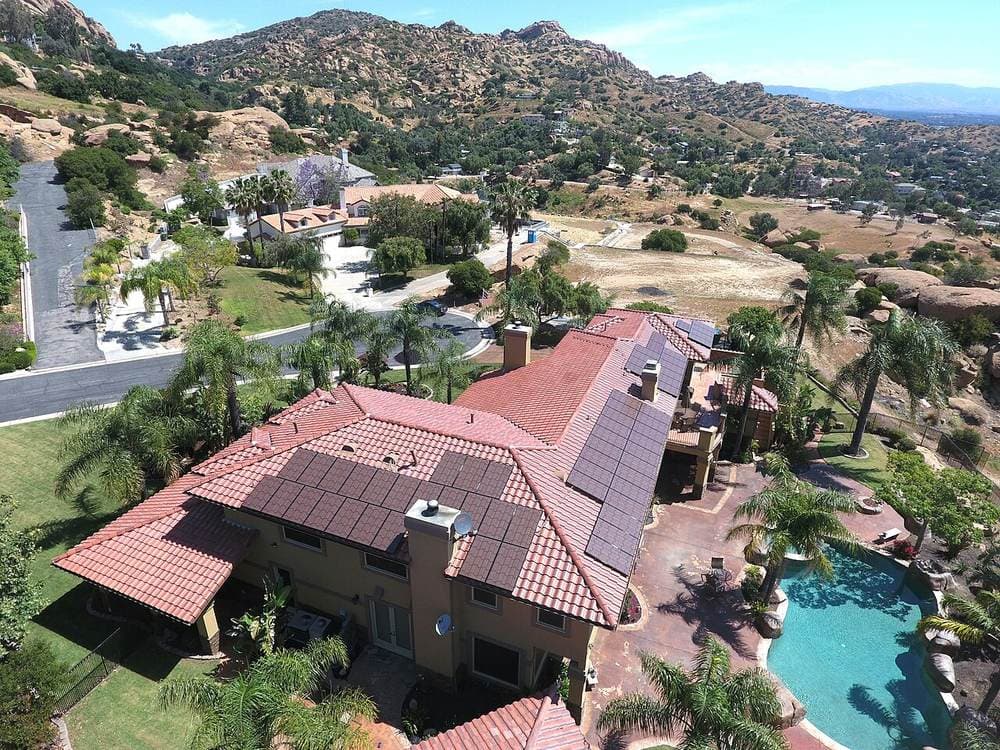
- In the U.S. interest rates rose sharply, making solar loans more expensive. In California new rules known as NEM 3.0 took effect — they cut what homeowners are paid for excess power sent to the grid and lengthened the payback period of the panels.
- In Europe demand dropped after the rush of purchases in 2022, and distributors' warehouses filled up with unsold equipment. pv magazine also reported that cheaper alternatives from China gained ground in Europe.
The result was dramatic. Revenue in the fourth quarter of 2023 was $302 million — less than half of the $724 million a year earlier. In December the company announced it would cut about 10% of its workforce. In 2024 annual revenue fell to $1.33 billion (from $2.29 billion in 2023), and net income dropped from $439 million to $103 million.
Policy did not help either. A law passed in the U.S. in 2025 (the One Big Beautiful Bill Act) ended the 25D federal tax credit for homeowners who buy their own solar systems on December 31, 2025.
Over these years the stock slid slowly but steadily. In September 2025, because its market value had shrunk, the company was moved from the S&P 500 to the small-company S&P SmallCap 600 index. In November 2025 the stock fell to about $26 — roughly 92% below its 2022 peak.
The business survived — the stock did not
There is an important distinction here: Enphase did not go bankrupt, and it did not slip back into losses. Even in the worst of 2024 the company reported $103 million in net income. According to Wikipedia, 2025 revenue was $1.47 billion with $172 million in net income. That is a very different business from the loss-making company of 2017.
So why did the stock fall 92%? Because at the end of 2022 the share price assumed revenue would keep growing fast for years. Instead, 2024 revenue came in about 43% below the 2022 peak — and the market repriced those expectations. Even a good business can turn out to be a bad investment at too high a price.
The second lesson is dependence on government policy. Demand for Enphase's products depends heavily on homeowners' tax credits, California's grid rules and interest rates. The company itself also benefits from incentives: in the fourth quarter of 2024 it shipped about 1.69 million microinverters from U.S. contract manufacturing facilities and booked production tax credits (45X) for them. When policy changes, these numbers change too.
The "strict discipline" rules Badri Kothandaraman introduced in 2017 kept the company alive. But in 2022 the stock price had climbed so high that even the best discipline could not keep it there.
What this story teaches
- 1
The biggest multiples often start at the darkest moment
Enphase's 500x run began amid a delisting threat and mass layoffs. But that is easy to see only in hindsight: most companies that were that cheap never came back. One success story is not a rule.
- 2
Track a turnaround in the numbers
Enphase's rebirth showed up not in promises but in hard numbers: margins rose, losses shrank, and an operating profit appeared in 2018. Trust improving quarterly figures, not turnaround talk.
- 3
A great business can be a bad investment at the wrong price
Enphase stayed profitable through 2023–2025, yet the stock fell 92%. The 2022 price assumed years of fast growth. The further a price runs ahead of the business, the more painful the reversal.
- 4
Demand driven by subsidies and policy is fickle
Tax credits, grid rules (NEM 3.0) and interest rates can change demand sharply within months. In an industry whose demand depends on government decisions, growth is cyclical.
- 5
For the halal investor
Solar energy equipment is not in itself a prohibited activity, but halal status also depends on financial ratios and changes over time. Check the current status on the ENPH page.
Today
Halal status
HalalThe status is re-checked after every quarterly report and may change.
Timeline
2006
Raghu Belur and Martin Fornage start work on the microinverter idea
2008
First commercial microinverter, the M175
- 1
2012-03
IPO at $6 a share
- 2
2014-09
Stock peaks near ~$17
- 3
2016
The "existential threat" year; mass layoffs
- 4
2017-05
Stock at ~$0.65 — one of its all-time lows
- 5
2017-09
Badri Kothandaraman becomes CEO
- 6
2018-06
Acquires SunPower's microinverter business
- 7
2018
Reaches an operating profit
- 8
2019
Stock up ~450% for the year
- 9
2020
Stock up ~570% for the year; revenue $774 million
- 10
2021-01
Joins the S&P 500
- 11
2022-12
Stock peaks at ~$340; annual revenue $2.33 billion
- 12
2023-12
Demand slumps; about 10% of staff cut
- 13
2025-09
Moved from the S&P 500 to the S&P SmallCap 600
- 14
2025-11
Stock at ~$26 — about 92% below the peak
Frequently asked questions
What does Enphase Energy make?+
Enphase makes microinverters for solar panels — small devices that convert each panel's direct current into alternating current separately — plus home batteries, EV chargers and the software that manages them. Its main customers are homeowners and solar installation firms.
How much did Enphase stock rise?+
Based on split-adjusted monthly prices, the stock rose from about $0.65 in May 2017 to about $340 in December 2022 — roughly 500x in five and a half years. In 2019 and 2020 alone it gained about 450% and 570% respectively.
Why did Enphase stock fall?+
From 2023 interest rates rose in the U.S., California's NEM 3.0 rules lengthened the payback period for panels, and warehouses in Europe filled up. Revenue fell from $2.33 billion in 2022 to $1.33 billion in 2024, and by November 2025 the stock was about 92% below its peak.
Is Enphase going bankrupt?+
No — according to its public reports the company still made a net profit in 2024 and 2025. The fall in the share price was driven mainly by reset growth expectations and lower demand.
Is ENPH stock halal?+
Halal status depends on the company's business and financial ratios (debt, interest income and so on) and changes over time. See the current status on the ENPH page on limitup.
For every super-company there are dozens that never made it. For balance, read the Fallen giants stories too. Fallen giants →
Find companies like these yourself
Limitup covers the halal status, financials, superinvestor portfolios and a screener for thousands of US stocks. Check the signs from these stories in today's companies.
Read next
Tesla tarixi: bankrotlik yoqasidagi startapdan dunyoning eng qimmat avtomobil kompaniyasigacha
Hamma "elektromobil o'yinchoq" deb kulgan, kamida ikki marta o'limga bir necha hafta qolgan va baribir butun avtomobil sanoatini o'ziga ergashtirgan kompaniya.
6 min read
The Super Micro story: the server maker that rose 35x in two years and fell 86% in eight months
The AI boom turned an ordinary server assembler into a Wall Street star. Then its auditor resigned — and it turned out this was not the company's first reporting problem.
10 min read
Zoom tarixi: kompaniya g'alaba qildi, aksiya esa 90% qulab tushdi
Pandemiyada butun dunyoni bir-biriga bog'lagan, bugun ham milliardlab foyda ko'radigan kompaniya. Uning aksiyasini cho'qqida sotib olganlar esa pulining katta qismini yo'qotdi. Qanday qilib?
6 min read
Peloton tarixi: pandemiya qahramonidan 95% qulagan aksiyagacha
Butun dunyo uyda qamalib qolganda hamma uni xohladi. Eshiklar ochilgach esa ma'lum bo'ldiki, kompaniya vaqtinchalik talabni abadiy deb o'ylagan ekan.
6 min read