 since 1993
By the numbers: if you had invested $1,000
5 years ago
$8 938
from Oct 2021 · +55% a year on average
10 years ago
$13 346
from Oct 2016 · +30% a year on average
Entire listed history
$35 184
from Mar 2007 · +20% a year on average
Deepest drawdown
-77%
from the Mar 2024 peak to Mar 2026
Now vs. peak
-69%
Mar 2024
Price history — log scale: equal height means equal percentage change
Numbers on the chart match events in the timeline.
Based on monthly closes with dividends reinvested (source: Yahoo Finance, SMCI). Past performance does not guarantee future results.
35x in two years
Imagine it is spring 2022. You buy shares in a server maker from California. Most investors have never heard of it — it makes no phones and no social networks. Its business is metal boxes for data centers: servers.
At that point Super Micro Computer (ticker SMCI) traded, adjusted for later splits, at roughly $3.4. In less than two years, by March 2024, it was above $120. That is about 35 times. Put differently, a $1,000 stake would have turned into $35,000 in a very short time.
The company's market value rose from about $4.5 billion at the end of 2022 to about $60 billion by March 2024, and Super Micro joined America's best-known index, the S&P 500.
But that is only the first half of the story. Just eight months after the peak, in November 2024, the stock was at $17 — about 86% below the top. The cause was neither a competitor nor fading demand. The company could not file its financial report on time, and its auditor walked away, saying it no longer wanted to be associated with those financial statements.
To understand how that happened, we need to go back to 1993.
An empire built from server parts
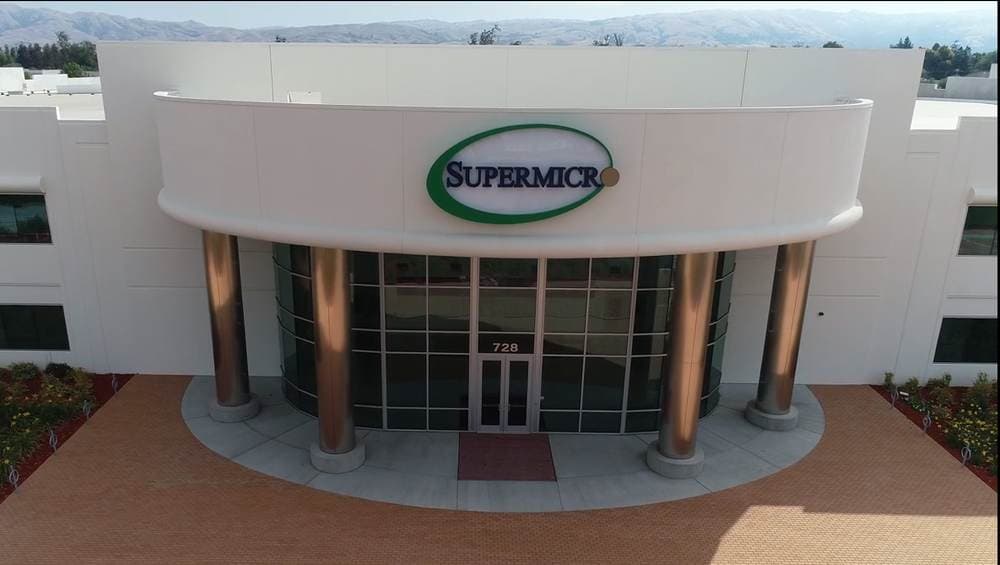
Super Micro was founded in 1993 by Taiwanese-born engineer Charles Liang. It started as a five-person team; Liang's wife Sara Liu ran the finances, and Wally Liaw was another co-founder. According to Liang, the company turned a profit about six months after it started.
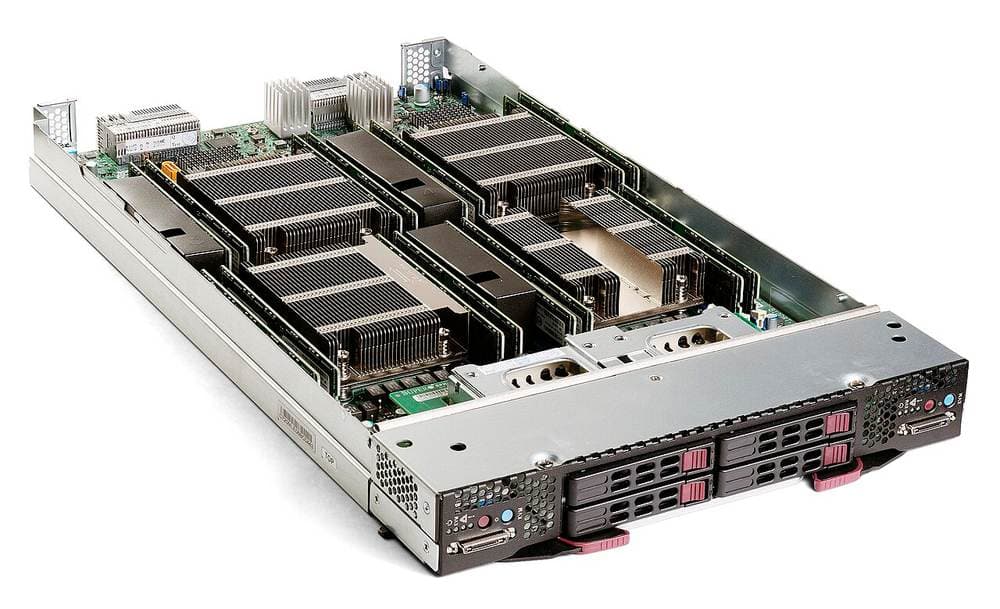
Super Micro's approach was simple: build servers from the same standard parts — "building blocks". That let it assemble the configuration a customer needed quickly, and put a new processor or graphics chip into a server among the first in the industry. Super Micro does not make chips itself: it buys chips from Intel, AMD and Nvidia and turns them into working systems.
In March 2007 the company listed on Nasdaq, selling 8 million shares at $8 and raising $64 million. For the next decade Super Micro remained a well-known but unglamorous name in its industry: in 2009 it had about $720 million in sales and close to 1,100 employees.
One detail is worth remembering: in 2006 the company pleaded guilty to violating the Iran embargo and paid a $150,000 fine. That was a small episode. The next one was much more serious.
The first warning: 2017–2020
In 2017 Super Micro stopped filing its annual report (10-K). The company's audit committee opened an internal investigation, after which several executives, including CFO Howard Hideshima, left the company.
The filings kept slipping, and Nasdaq's patience ran out. The company could not file its annual report for fiscal 2017 or the three quarterly reports that followed. On August 23, 2018 trading in the stock was suspended on Nasdaq, and in March 2019 the company was formally delisted. For a while the shares traded over the counter (OTC).
At the same time another blow landed. On October 4, 2018 Bloomberg Businessweek reported that actors linked to the Chinese military had pressured subcontractors into adding malicious chips to Super Micro servers. Super Micro denied the claims and later told the U.S. Securities and Exchange Commission (SEC) it was "confident" no malicious chip had been implanted. But the market did not wait: that month the stock (split-adjusted) fell to about $0.85.
The reckoning came in 2020. The company relisted on Nasdaq (January 2020), and in August it settled with the SEC. According to the SEC, Super Micro had prematurely recognized revenue and understated expenses over a period of at least three years — for example, booking revenue on goods shipped to warehouses but not yet delivered to customers. Without admitting or denying the findings, the company agreed to pay a $17.5 million penalty. The former CFO paid a penalty personally. Charles Liang was not charged with misconduct, but under the law's clawback provision he repaid the company $2.1 million in stock-sale profits from that period.
Most investors quickly forgot about it. A boom was coming that would drown out any talk of old mistakes.
The AI wave
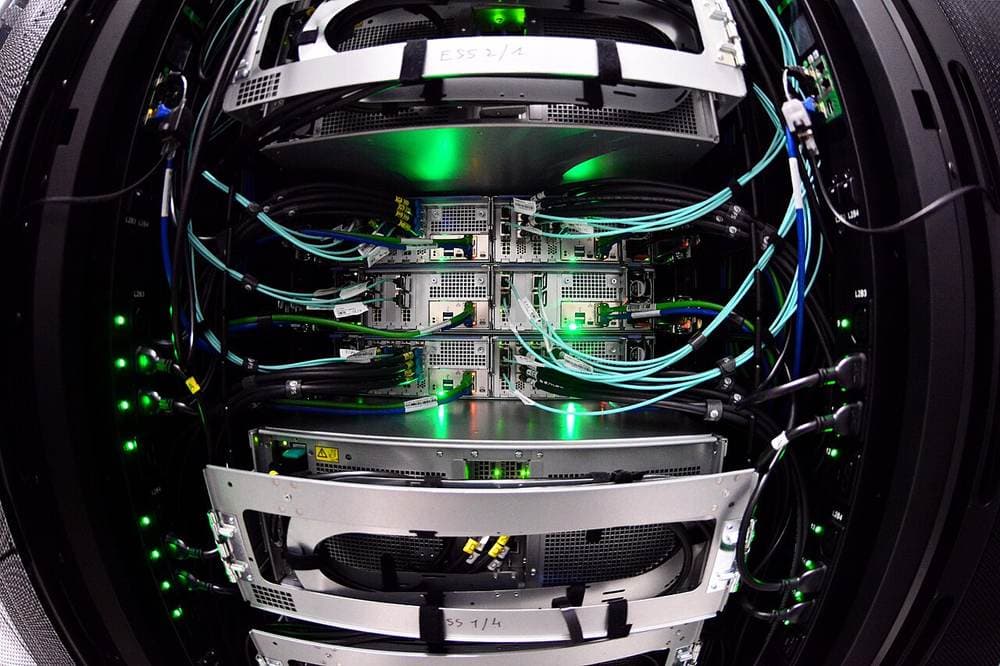
In November 2022 ChatGPT launched, and the world's tech companies rushed to buy thousands of Nvidia graphics processors for AI models. But a chip alone is not enough: it has to be put into a server with power, cooling and networking, and the servers have to be assembled into racks.
This is where Super Micro's old strength paid off. Its "building blocks" approach let it ship servers based on Nvidia's newest chips quickly. Super Micro works closely with Nvidia, and in 2023 it launched liquid-cooled servers — claiming about 40% power savings versus air-cooled data centers. Powerful chips run very hot, so cooling was becoming more and more important.
The numbers speak for themselves. Super Micro's fiscal year ends in June:
- Fiscal 2022: revenue of $5.2 billion
- Fiscal 2023: $7.1 billion
- Fiscal 2024: $14.9 billion — more than double in one year, with net income of $1.2 billion
The market priced this growth even faster. In January–March 2024 the stock rose several-fold in three months and topped $1,000 on a pre-split basis. In March Super Micro joined the S&P 500, and in July it entered the Nasdaq-100.
But one worrying sign was hidden in the numbers: gross margin was falling — 18.0% in fiscal 2023, 14.1% in fiscal 2024. Super Micro moved a lot of money but kept only a small slice of each dollar. In a business like that, even a small accounting problem matters a lot.
And in the summer of 2024, questions about its accounting began to surface.
August 2024: another late filing
On August 27, 2024 short seller Hindenburg Research published a report on Super Micro. It contained several allegations: continued accounting violations, the rehiring of some staff linked to the 2018–2020 scandal, evasion of export controls, and dealings with suppliers owned by relatives of the CEO. Super Micro denied the allegations. It is also worth saying that Hindenburg profits when a stock falls, and its report is not a court ruling.
But the next day, August 28, Super Micro itself announced that its annual report (10-K) would not be filed on time, because the company needed more time to assess its internal controls over financial reporting. The stock fell by about a fifth in a single day. The company later disclosed that it had received subpoenas from the U.S. Department of Justice (DOJ) and the SEC.
In the middle of this, on October 1, 2024, the previously announced 10-for-1 stock split took effect: one share priced above $400 became ten shares of about $40. A split does not change the company's value — it only makes the price "look cheaper".
The worst news came at the end of October.
The auditor walks
Every public company's financial statements are checked by an independent auditor. Super Micro's auditor was one of the world's "Big Four" — Ernst & Young (EY). On October 24, 2024 EY sent a resignation letter to the company's audit committee, and it became public on October 30.
The letter's wording was far sharper than the usual formal language. EY said it was resigning due to "information that has recently come to our attention", that it could no longer rely on the representations of management and the audit committee, and that it was "unwilling to be associated with the financial statements prepared by management." It also questioned the ability and willingness of the audit committee and the board as a whole to act as an oversight body. EY had first raised concerns — about governance, transparency and the completeness of information given to it — back in July 2024.
Super Micro said it disagreed with EY's decision and did not expect the matters to lead to restatements of earlier reports. For the market, that was not enough. The stock dropped by about a third in one day, and by mid-November it had fallen to $17.25. From the March 2024 peak that was roughly -86%. In December the company was removed from the Nasdaq-100.
Now one question mattered: could Super Micro find a new auditor and file by the deadline Nasdaq had set — or would it be kicked off the exchange again, as in 2018?

The investigation's verdict — and the years after
The company formed a special committee of independent directors, advised by law firm Cooley and forensic accountants Secretariat Advisors. The committee reviewed more than 9 million documents and interviewed 68 witnesses. Its conclusions, announced on December 2, 2024:
- no evidence of misconduct by management or the board of directors was found;
- the conclusions in EY's letter were not supported by the facts examined;
- but there were lapses in internal controls, and "primary responsibility" for them was placed on the chief financial officer;
- it recommended appointing a new CFO, a chief compliance officer and a general counsel.
In November the company appointed BDO as its new auditor and submitted a plan to Nasdaq to regain compliance. Nasdaq extended the filing deadline, and on February 25, 2025 — the last possible day — Super Micro filed its overdue annual and quarterly reports. There were no restatements, and the company regained compliance with Nasdaq. But while BDO gave a clean opinion on the financial statements, it issued an adverse opinion on internal control: the company acknowledged several material weaknesses — in IT controls, documentation of manual journal entries and segregation of duties.
The business itself kept growing: according to Wikipedia, revenue rose from about $7 billion to $22 billion in the two years up to November 2025. But margins kept shrinking — gross margin was 10.1% in the third quarter of fiscal 2026. And in March 2026 co-founder Wally Liaw and two others were charged with conspiring to smuggle billions of dollars' worth of AI chips to China. Super Micro itself is not a defendant; Liaw left the board and pleaded not guilty, and the company's internal review found that current senior management was not involved.
The result is a bitter one for investors: someone who bought at the March 2024 peak had not seen the stock come anywhere near that price again by autumn 2026.
What this story teaches
- 1
You can catch a 10-bagger — holding it is the hard part
Super Micro rose roughly 35x from 2022 to 2024 and then lost 86% in eight months. For an investor who bought near the top, a great business story became a heavy loss. Multi-fold gains often come with equally violent reversals.
- 2
Governance history can repeat
Even before the 2024 crisis, the company had filed late, been delisted, and settled with the SEC for $17.5 million. When studying a company, look not only at its growth rate but also at its record on reporting and controls.
- 3
An auditor resigning is one of the most serious warnings
Auditors do not walk away from clients lightly. A resignation letter saying "we are unwilling to be associated with the financial statements" is a reason to stop and think, no matter how fast sales are growing. A late filing is the same kind of signal.
- 4
In a low-margin business, mistakes are expensive
Super Micro builds servers from other companies' chips and keeps a small share of each sales dollar as profit. In such a business a demand boom lifts revenue fast, but the moat is far shallower than that of a chip owner like Nvidia.
- 5
For the halal investor
The company's core business — servers and computing hardware — is not in itself a prohibited activity, but halal status also depends on financial ratios and changes over time. Check the current status on the SMCI page.
Today
Halal status
Not halalThe status is re-checked after every quarterly report and may change.
Timeline
1993
Charles Liang founds Super Micro in San Jose
- 1
2007-03
IPO: 8 million shares at $8, raising $64 million
- 2
2018-08
Trading suspended on Nasdaq over late filings
- 3
2018-10
Bloomberg's "spy chip" story; stock at ~$0.85 (split-adjusted)
- 4
2020-01
Relisted on Nasdaq
- 5
2020-08
SEC settlement: $17.5 million penalty
- 6
2022-04
Low point before the AI boom: ~$3.4 (split-adjusted)
- 7
2023
Liquid-cooled servers; fiscal 2023 revenue $7.1 billion
- 8
2024-03
Joins the S&P 500; stock peaks at ~$123 (split-adjusted)
- 9
2024-08
Hindenburg report; annual report delayed
- 10
2024-10
10-for-1 stock split; EY resigns as auditor
- 11
2024-11
BDO appointed; stock at ~$17 — about 86% below the peak
- 12
2024-12
Special committee finds no evidence of misconduct
- 13
2025-02
Overdue reports filed; Nasdaq compliance regained
- 14
2026-03
Co-founder Wally Liaw charged in chip-smuggling case (the company is not a defendant)
Frequently asked questions
What does Super Micro Computer make?+
Super Micro (Supermicro) designs and assembles servers, storage systems and complete server racks for data centers, including AI servers built on Nvidia and AMD graphics processors and liquid-cooling systems. The chips themselves are made by other companies.
Why did SMCI stock rise so fast?+
After ChatGPT launched in late 2022, demand for GPU servers for AI surged. Super Micro was able to ship servers based on Nvidia chips quickly, and its revenue grew from $5.2 billion in fiscal 2022 to $14.9 billion in fiscal 2024. The stock rose roughly 35x from April 2022 to March 2024.
Why did Super Micro stock crash?+
In August 2024 the company delayed its annual report, and in October its auditor, Ernst & Young, resigned citing concerns about governance and transparency. A Nasdaq delisting became a real risk, and the stock fell about 86% from its March 2024 peak by November.
Was fraud proven at Super Micro?+
In 2020 the SEC fined the company $17.5 million for accounting violations in fiscal 2014–2017 (the company neither admitted nor denied the findings). For the 2024 events, the company's special committee found no evidence of misconduct by management, but serious weaknesses in internal controls were acknowledged. Hindenburg's claims are a short seller's allegations, not a court ruling.
Is SMCI stock halal?+
Halal status depends on the company's business and financial ratios (debt, interest income and so on) and changes over time. See the current status on the SMCI page on limitup.
For every super-company there are dozens that never made it. For balance, read the Fallen giants stories too. Fallen giants →
Find companies like these yourself
Limitup covers the halal status, financials, superinvestor portfolios and a screener for thousands of US stocks. Check the signs from these stories in today's companies.
Read next
Nvidia tarixi: bankrotlikka 30 kun qolgan kompaniyadan dunyoning eng qimmat kompaniyasigacha
Yo'l bo'yidagi oshxonada tug'ilgan, bir necha marta o'limga yaqin kelgan va oxiri sun'iy intellekt davrining asosiy "belkurak sotuvchisi"ga aylangan kompaniya.
8 min read
The Vertiv story: how a "boring" air-conditioning business rose 45x in four years
In the summer of 2022 nobody wanted this $8 stock — less than four years later it hit $376. The secret: AI chips run extremely hot, and Vertiv makes the equipment that cools and powers them.
8 min read
AMD tarixi: $2 lik aksiyadan Intel'ni ortda qoldirgan kompaniyagacha
Yarim asr davomida Intel soyasida yashagan, bir necha bor bankrotlik yoqasiga kelgan va bitta rahbar qo'lida qayta tug'ilgan kompaniya.
6 min read
The Enphase story: from a sub-$1 stock to a 500x gain — and the 92% crash that followed
In 2017 this solar company was at risk of being kicked off Nasdaq. Five and a half years later it was one of the fastest-rising stocks on Wall Street. Then the sun set again.
8 min read