 since 1946
By the numbers: if you had invested $1,000
5 years ago
$8 079
from Oct 2021 · +52% a year on average
Entire listed history
$21 333
from Aug 2018 · +45% a year on average
Deepest drawdown
-71%
from the Aug 2021 peak to Jun 2022
Now vs. peak
-38%
Jun 2026
Price history — log scale: equal height means equal percentage change
Numbers on the chart match events in the timeline.
Based on monthly closes with dividends reinvested (source: Yahoo Finance, VRT). Past performance does not guarantee future results.
Invisible, yet everything depends on it
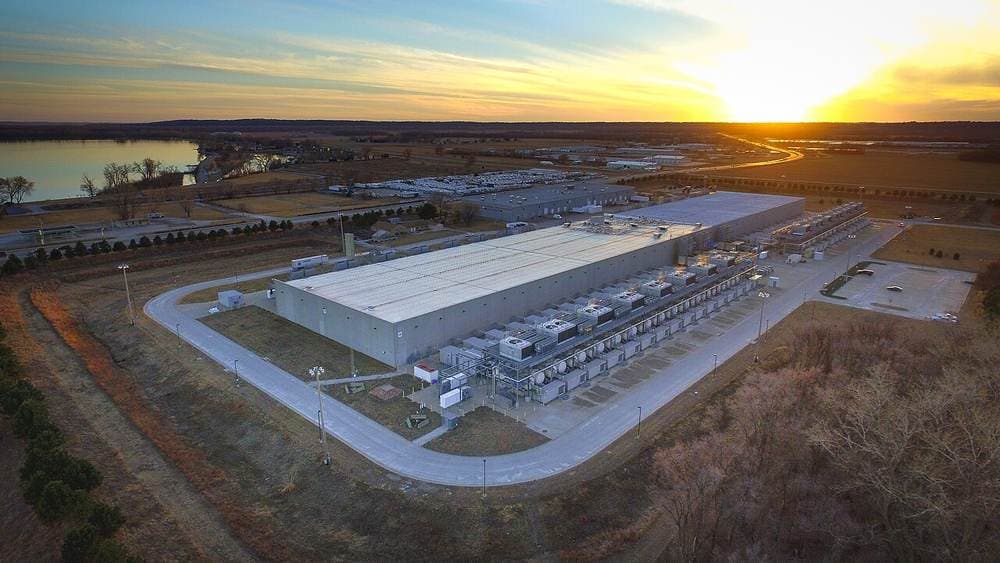
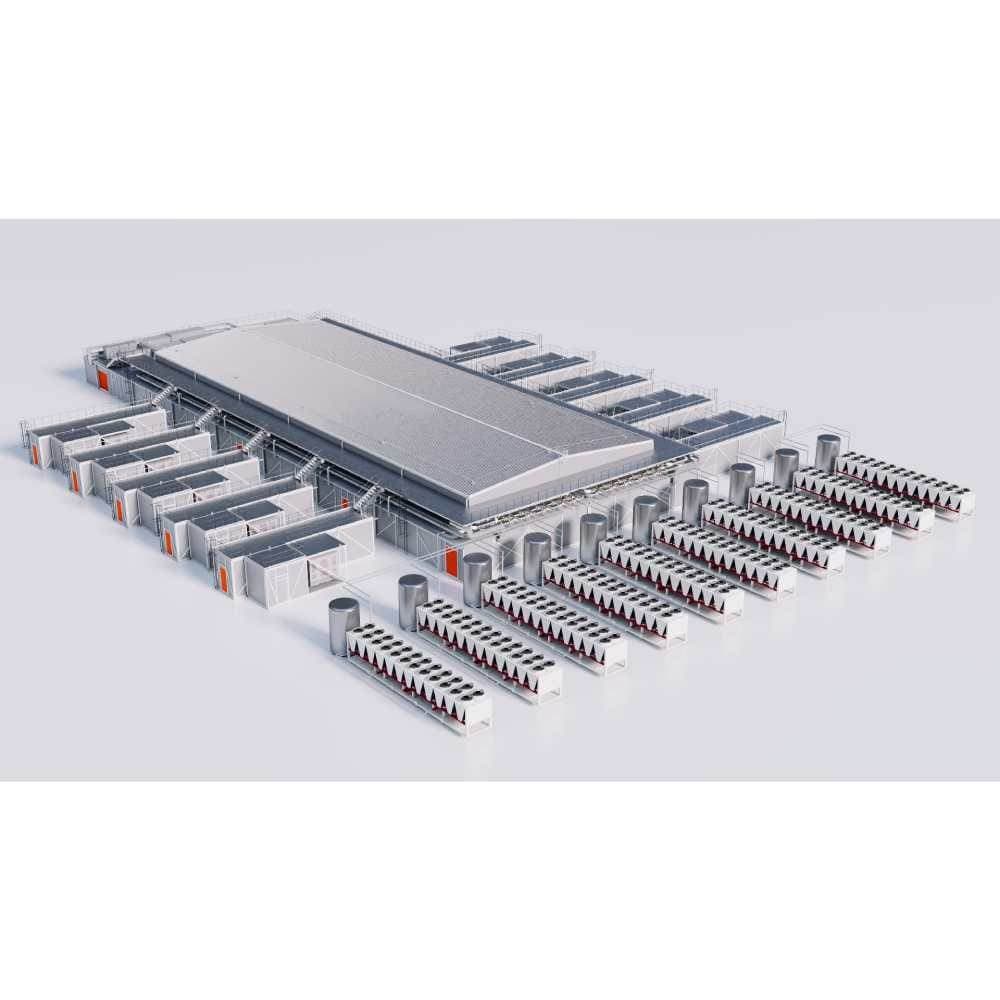
When you ask ChatGPT a question, the answer is born somewhere in a huge building — a data center — inside thousands of chips. Those chips consume enormous amounts of electricity and get extremely hot. If you stop cooling them for a few minutes, or the power drops for a single second, billions of dollars of equipment stop working.
Everyone knows the chip makers — Nvidia, AMD, TSMC. Far fewer people think about the unglamorous equipment that keeps them alive: giant air-conditioning units, liquid-cooling systems, battery-backed power units (UPS), power distribution cabinets. That is what Vertiv does.
And here is the number. On June 30, 2022, Vertiv stock closed at $8.22. On May 14, 2026, it closed at $376.23. That is roughly 45x, in less than four years. $1,000 invested that day would have been worth about $45,800 at the peak.
The interesting part: this is not a new company. Its roots go back to 1946. This is not a "startup in a garage" story — it is the story of an old, overlooked business that suddenly found itself standing in the most important place in the world.
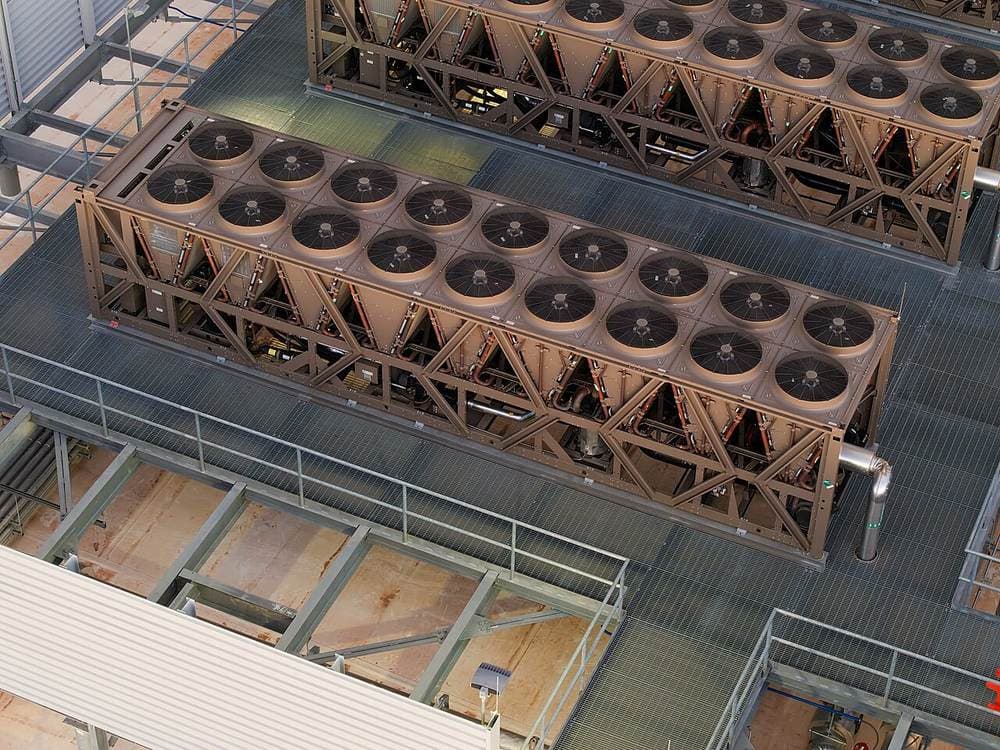
An air conditioner for the computer room
In 1946 Ralph Liebert started a small refrigeration company in Columbus, Ohio. Back then computers were the size of a room, and they ran hot too. Liebert Corporation, formed in 1965, became the first in the industry to build air conditioners designed specifically for computer rooms.
Then the company added a second important line: in 1983 it acquired a maker of uninterruptible power supplies (UPS). A UPS instantly switches computers to batteries when the grid fails, so they don't shut down. Liebert now owned a narrow but critical niche: keeping the computer room cold and powered.
In 1987 the industrial conglomerate Emerson Electric bought Liebert. In 2000 Emerson merged it with similar businesses into one unit — Emerson Network Power — and added acquisitions over the following years (Knürr, Avocent, Chloride).
But inside a huge conglomerate, the unit became "average". By the mid-2010s, Emerson decided to let it go.
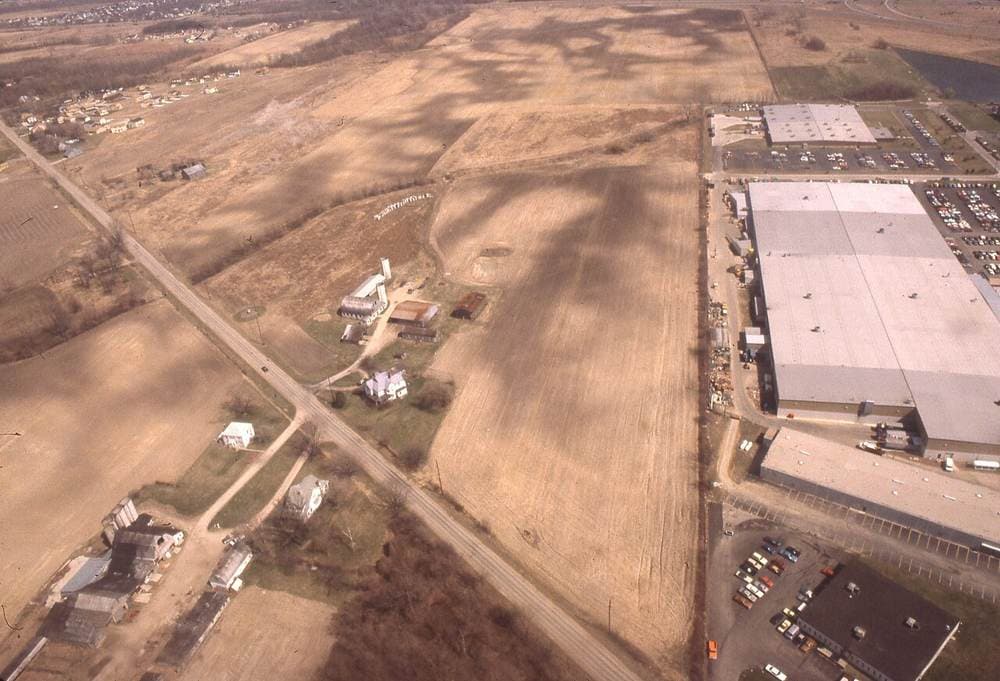
Emerson sells, a private-equity firm buys
In December 2016 the private-equity firm Platinum Equity bought Emerson Network Power in a deal valued at "in excess of $4 billion"; Emerson kept a small stake. The new owners renamed the company Vertiv and appointed Rob Johnson as CEO.
Private-equity firms usually work like this: buy a business cheaply, clean it up, sell the non-core parts, then sell it or take it public at a higher price. In 2017 Vertiv sold its ASCO power-switching business to Schneider Electric for $1.25 billion. By 2018 the company had nearly $4.3 billion in sales and about 20,000 employees.
It was a big but not exactly "exciting" industrial business: air conditioners, battery cabinets, field service. Wall Street usually calls companies like that boring. And they chose an unusual route to the stock market.
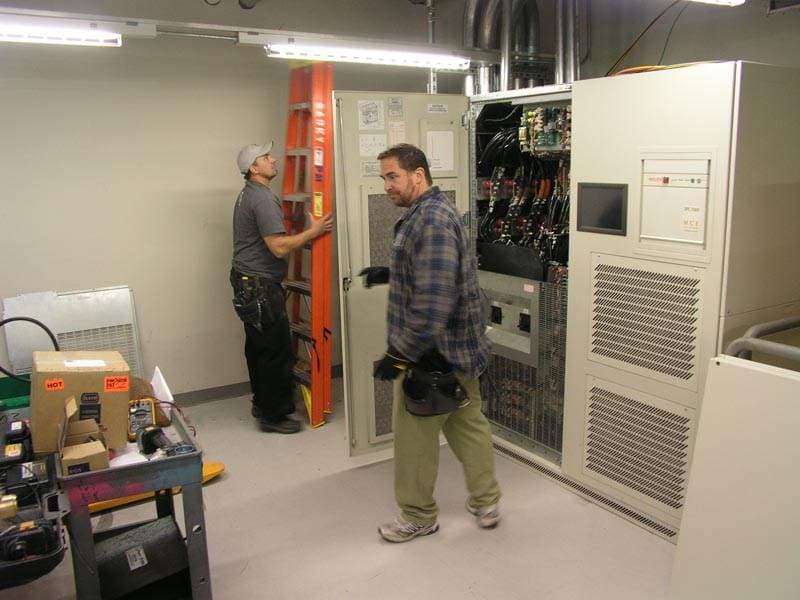
Going public via a SPAC — straight into a pandemic
In December 2019 Vertiv announced a merger with GS Acquisition Holdings — a SPAC, a "blank-check" shell company that raises money on the exchange and then buys a private company. It was backed by Goldman Sachs and led by former Honeywell chief David Cote. The deal valued Vertiv at a pro-forma enterprise value of about $5.3 billion, and Platinum Equity was expected to keep roughly 38% of the combined company. Cote became Vertiv's executive chairman.
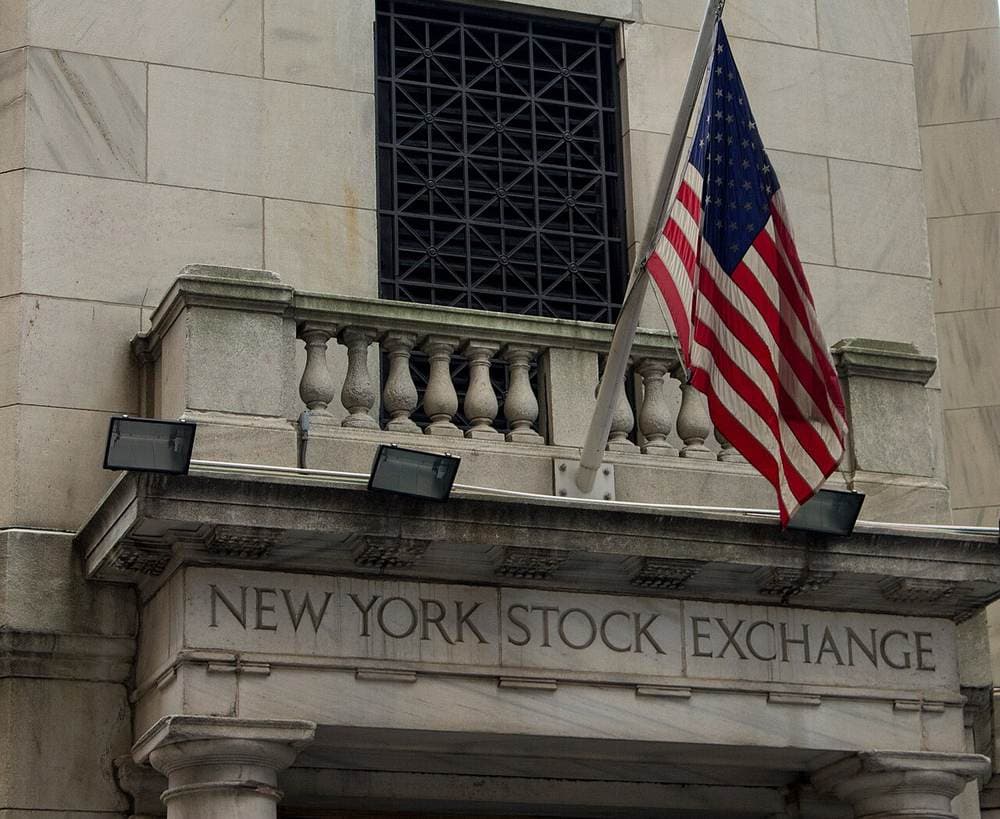
On February 10, 2020, Vertiv began trading on the NYSE under the ticker VRT, closing around $13 that day. A month later COVID-19 crashed the whole market: on March 18 the stock fell to $5.57.
But the pandemic helped Vertiv more than it hurt: people worked from home, demand for internet and cloud services rose, and data centers expanded. By September 2021 the stock reached $28.59. Confident, the company bought E+I Engineering for $1.8 billion in 2021.
Everything looked fine. But a problem was brewing inside.
-37% in one day: the company that noticed inflation too late
In 2021 raw materials, copper, steel, chips and shipping all got sharply more expensive worldwide. Vertiv, however, had already sold equipment to customers at pre-agreed prices. The result: costs went up, prices didn't — and profits began to melt.
On February 23, 2022, the company reported its fourth-quarter 2021 results. Analysts expected $0.28 of earnings per share — Vertiv delivered just $0.06. CEO Rob Johnson openly admitted that the company had consistently underestimated inflation and supply-chain constraints in both timing and degree, and so had not raised prices enough in 2021. The 2022 outlook also came in far below what analysts expected.
That day the stock fell from $19.57 to $12.38 — down 37%. And that wasn't the end. On June 30, 2022, it closed at $8.22 — about 71% below its 2021 peak. For full-year 2022, adjusted operating profit came in at $439 million, well below the $525 million promised at the start of the year. On $5.7 billion of sales, that is a margin of only about 8%.
To most people in the summer of 2022, Vertiv looked like "just another failed SPAC". Right then, the two main characters of the next chapter were stepping onto the stage.
A new CEO and "pricing discipline"
On January 1, 2023, Vertiv got a new chief executive — Giordano Albertazzi. The lessons of the previous year were clear: prices had to follow costs quickly, unprofitable orders had to be turned down, and the factories had to run more efficiently. The company had already started raising prices in 2022, and in 2023 the effect became visible.
On August 2, 2023, Vertiv reported its second-quarter results. Sales grew 24% year over year to $1.73 billion, and the adjusted operating margin reached 14.5% — 8.6 percentage points higher than a year earlier. The company raised its full-year outlook and called AI a long-term secular tailwind for the industry.
The market digested this in a single day: the stock jumped from $26.53 to $34.29 — about 29%. By the end of 2023 it was around $48 — almost six times its 2022 low.
But this was only the beginning. Because at that very moment, the world's largest technology companies were starting the biggest construction wave in their history.
Artificial intelligence is heat
When demand for Nvidia chips exploded, a simple physical fact came to the surface: new AI servers use several times more electricity per rack than older ones and produce just as much more heat. Ordinary air cooling was no longer enough — liquid had to be pumped directly to the chips.
Vertiv had prepared for this: in 2023 it bought CoolTera, a liquid-cooling infrastructure company. In October 2024 Vertiv and Nvidia announced a co-developed complete power and cooling blueprint for the GB200 NVL72 platform: a 7 MW data-center design supporting up to 132 kW per rack. In August 2025 the company introduced OneCore — a modular data-center system built in the factory and assembled quickly on site.
The numbers tell the story:
- Sales: $5.7 billion in 2022, $8.0 billion in 2024, $10.2 billion in 2025.
- Adjusted operating margin: about 8% in 2022, 20.4% in 2025.
- Backlog: $15.0 billion at the end of 2025 — more than double in a year. Fourth-quarter organic orders were up about 252% year over year.
That is where the 45x came from: sales nearly doubled, margins more than doubled, and the market began paying a much higher price for the future. When all three work at once, the share price grows many times faster than sales. In March 2026 Vertiv joined the S&P 500, and on May 14 the stock peaked at $376.23.
Not a smooth road: -30% in a day, -61% in three months
A 45x gain sounds wonderful, but holding it was not easy.
- January 27, 2025. China's DeepSeek released a cheap AI model, and fear spread through the market: "what if we don't need so many chips and data centers?" Vertiv fell from $146.32 to $102.60 — about 30% — in one day.
- Spring 2025. A broad market sell-off piled on top. From its $153.49 peak on January 23, 2025, the stock fell to $59.41 by April 4 — down about 61%.
- Summer 2026. After the May peak, the stock lost about another 41% by the end of July.
The risks are real too:
- Vertiv's growth depends heavily on the data-center investment wave. If that wave slows, orders and the stock can fall fast.
- It is an industrial manufacturer: raw-material prices, supply chains and tariffs hit margins directly — 2022 proved that.
- The share price already assumes huge future growth. Even a small delay in expected results can trigger a sharp drop.
And the key question: how many investors who bought Vertiv in 2022 could have held through three subsequent drops of 30–60%? Very few. That is the hardest truth of every multibagger story.
What this story teaches
- 1
"Picks and shovels" can be multibaggers too
The person selling shovels to gold prospectors often makes money more reliably than the prospectors. In the AI boom, beyond the chip makers, the companies that cool and power those chips also earned huge profits. When a big trend appears, look not only at the most famous name but also at its supply chain.
- 2
Margin expansion is the most powerful engine
Vertiv's sales grew about 1.8x from 2022 to 2025, while the stock grew dozens of times. Margins made the difference: from about 8% to above 20%. Once a company learns to control its pricing, every extra dollar of sales brings much more profit.
- 3
The best opportunity often arrives with the worst news
In 2022 Vertiv openly admitted its mistake, the stock fell 37% in a day and everyone ran away. Telling whether a problem is temporary (mispricing) or permanent (the business itself is dying) is one of the most valuable skills an investor can have.
- 4
Multibagger gains and deep drawdowns travel together
A stock that rose 45x went through drops of -71%, -61% and -41% along the way. Size a position in a stock like this so you can survive every drop — don't bet your entire savings on one story.
- 5
For the halal investor
Vertiv's core business — cooling and power equipment — is not a prohibited industry in itself, but halal status also depends on debt and other financial ratios and can change over time. Check its current status on the VRT page.
Today
Halal status
HalalThe status is re-checked after every quarterly report and may change.
Superinvestors
SEC 13F, 2026 Q3. Up to 45 days delayed.Held by 2 superinvestors · Average reported price: $334.82
- Terry SmithFundsmith$14.0M0.1%
- Mairs & Power Funds$261K0.0%
Timeline
1946
Ralph Liebert starts a refrigeration company in Columbus
1965
Liebert — the first purpose-built computer-room air conditioners
1987-03
Emerson Electric acquires Liebert
2000
Emerson Network Power unit is formed
2016-12
Platinum Equity buys the business for over $4B; it is renamed Vertiv
- 1
2019-12
Merger with GS Acquisition Holdings (SPAC) announced
- 2
2020-02
Trading begins on the NYSE as VRT (~$13)
- 3
2020-03
Pandemic crash: the stock falls to $5.57
- 4
2022-02
Weak report: -37% in one day
- 5
2022-06
The bottom: $8.22 — ~-71% from the 2021 peak
- 6
2023-01
Giordano Albertazzi becomes CEO
- 7
2023-08
Margin reaches 14.5%, stock jumps ~29% in a day
- 8
2024-10
Power and cooling blueprint for GB200 NVL72, co-developed with Nvidia
- 9
2025-01
DeepSeek scare: ~-30% in one day
- 10
2025-04
~-61% from the peak ($59.41)
- 11
2026-03
Added to the S&P 500
- 12
2026-05
Peak: $376.23 — about 45x from the 2022 low
Frequently asked questions
What does Vertiv make?+
Vertiv makes critical infrastructure equipment for data centers and other mission-critical sites: cooling systems (air and liquid), uninterruptible power supplies (UPS), power distribution units, modular data centers and related services. Its roots go back to Liebert, founded in 1946.
How many times did Vertiv stock grow?+
According to split-adjusted Yahoo data, the stock closed at $8.22 on June 30, 2022 and at $376.23 on May 14, 2026 — roughly 45x in less than four years. Measured from its February 2020 listing price (~$13), the gain is about 29x.
Why did Vertiv grow so fast?+
Three things worked at once: AI data-center construction sharply increased demand for its equipment; after the 2022 mistake the company learned to manage prices and costs, lifting its margin from about 8% to above 20%; and the market began to value its future growth much more highly.
Is Vertiv stock halal?+
Halal status depends on the company's business and financial ratios and can change over time. See the current status on the VRT page on limitup.
For every super-company there are dozens that never made it. For balance, read the Fallen giants stories too. Fallen giants →
Find companies like these yourself
Limitup covers the halal status, financials, superinvestor portfolios and a screener for thousands of US stocks. Check the signs from these stories in today's companies.
Read next
Nvidia tarixi: bankrotlikka 30 kun qolgan kompaniyadan dunyoning eng qimmat kompaniyasigacha
Yo'l bo'yidagi oshxonada tug'ilgan, bir necha marta o'limga yaqin kelgan va oxiri sun'iy intellekt davrining asosiy "belkurak sotuvchisi"ga aylangan kompaniya.
8 min read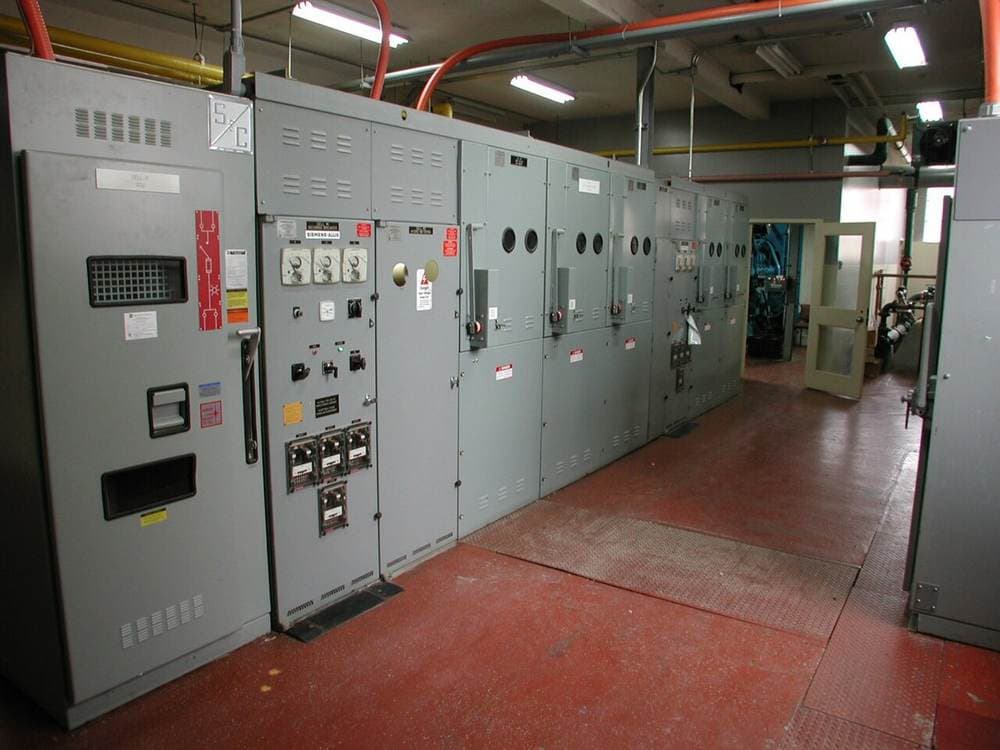
The Powell Industries story: Houston's "boring" electrical cabinets rose 50x in four years
No app, no AI model — just huge electrical cabinets assembled in a factory. Yet from 2022 to 2026 this small Texas company's stock rose roughly 51x.
7 min read
The Super Micro story: the server maker that rose 35x in two years and fell 86% in eight months
The AI boom turned an ordinary server assembler into a Wall Street star. Then its auditor resigned — and it turned out this was not the company's first reporting problem.
10 min read
TSMC tarixi: 56 yoshli muhandisning g'oyasi qanday qilib dunyo chiplarining yuragiga aylandi
O'zining birorta ham mahsuloti yo'q, lekin Apple, Nvidia va AMD chiplarining katta qismini yasaydigan Tayvan kompaniyasi.
6 min read