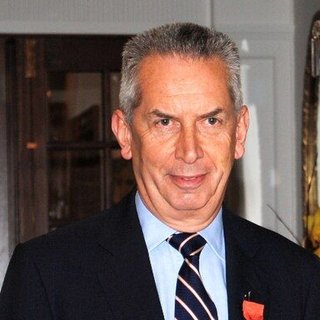
Founder of Fundsmith, the British investor dubbed "the English Warren Buffett" for buying quality companies and holding them for the long term.
Life story
Terry Smith was born on May 15, 1953, in East London. He attended Stratford Grammar School and then read history at University College Cardiff, graduating in 1974. Little is publicly known about his family or childhood.
Outside finance he has pursued boxing, shooting, flying, competitive cycling and Muay Thai, and he led the campaign that erected statues honouring the WWII RAF commander Sir Keith Park.
How they got started
Smith started at Barclays Bank in 1973 and later worked as an analyst at W. Greenwell & Co. From 1984 to 1989 he was one of the top-rated bank analysts at Barclays de Zoete Wedd, and from 1990 to 1992 he headed UK company research at UBS Phillips & Drew.
After a wave of corporate collapses in 1990 he wrote "Accounting for Growth", exposing misleading accounting techniques used by failing companies. The book became a bestseller, but UBS demanded it be withdrawn; when Smith refused he was fired and sued, and the dispute was settled out of court after 18 months.
In 1992 he joined broker Collins Stewart, became CEO after a management buyout in 2000 and floated the firm on the London Stock Exchange. He bought Tullett Liberty (2003) and Prebon Group (2004), later demerged Tullett Prebon, and left it in 2014. In November 2010 he founded Fundsmith in London.
Investment style
Smith's formula is short: buy good companies, don't overpay, do nothing. He looks for businesses with high returns on capital, defensible competitive advantages and sensible valuations, and deliberately avoids banks, emerging technologies and cyclical industries.
The portfolio is concentrated and positions are held for years. Smith openly criticises excessive trading and high fees, and he has more than £250m of his own money in the Fundsmith Equity Fund.
Best decisions
"Accounting for Growth" (1992)
Even at the cost of his job, his exposé of accounting tricks became a bestseller and built his reputation as someone who reads financial statements more deeply than most.
Collins Stewart and Tullett Prebon
After the 2000 buyout and listing he expanded the firm by buying Tullett Liberty and Prebon Group, later demerged Tullett Prebon as a separate company, and left in 2014.
Fundsmith Equity's first 14 years
From its 2010 launch to August 2024 the fund returned 599.9% in total (about 15.1% a year), versus 371.8% for the MSCI World index.
Biggest mistakes
Novo Nordisk and 2025
In 2025 Fundsmith Equity returned just 0.8% against 12.8% for the MSCI World. Novo Nordisk alone cost the fund about 3 percentage points; it was the fifth consecutive calendar year of underperformance.
Fundsmith Emerging Equities Trust
The emerging-markets investment trust failed to deliver and was liquidated in 2022 because of underperformance.
Today
In 2026 Smith is 73 and remains CEO and CIO of Fundsmith, based in Cavendish Square, London; Julian Robins is head of research and co-founder.
Smith has blamed recent weak results on index concentration in a handful of mega-caps, the flood of money into passive funds and dollar weakness. The long-term record is still strong, but the fund has lagged the index over the last five and ten years.
What to learn from following the portfolio
- Smith trades rarely, so a NEW position in his portfolio is an infrequent and meaningful signal; the long-held names work as a list of companies that pass his "quality" test.
- He avoids banks and cyclicals and favours technology, consumer staples and healthcare — sectors where more companies tend to pass halal screening. Check each position's halal status in the Portfolio tab.
- 13F shows only long US-listed positions, with a 45-day delay; Fundsmith's European holdings may not appear here.
- Even the most disciplined investor can lag the index for years (2021–2025) — copying a portfolio blindly is not a strategy, it is only a source of ideas.
An introduction based on public sources — not investment advice. Spotted an error? Let us know.