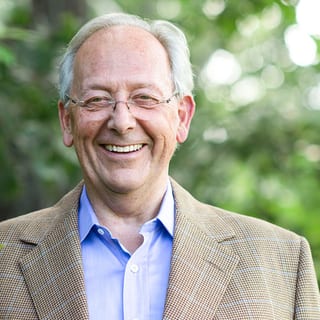
Founder of Akre Capital Management — known for his "three-legged stool" philosophy and his hunt for "compounding machines".
Life story
Charles T. "Chuck" Akre Jr. was born in 1942 or 1943 and grew up in Washington, D.C. He graduated from Blair Academy, then attended American University, starting in pre-med before switching to English literature, in which he earned his bachelor's degree. Little is publicly known about his family.
How they got started
Akre entered the securities business in 1968 and worked at Johnston, Lemon & Co., a New York Stock Exchange member firm. He founded Akre Capital Management in 1989; from 1989 to 1999 the firm operated within Friedman, Billings, Ramsey & Co.
The FBR Focus Fund he ran returned about 12.5% a year from December 1996 to October 2009, beating the Russell 2000 Growth index by roughly ten percentage points a year. In 2002 the firm moved to the small town of Middleburg, Virginia, and in 2009 it launched the Akre Focus Fund.
Effective December 31, 2020, Akre stepped down as portfolio manager of the Akre Focus Fund, handing day-to-day management to John Neff and Chris Cerrone; he remained the firm's founder and chairman.
Investment style
At the heart of Akre's philosophy is the "three-legged stool": 1) an extraordinary business with high returns on capital and durable advantages; 2) talented, honest management; 3) the ability to reinvest free cash flow at high rates of return. Companies that meet all three he calls "compounding machines."
Once he finds them, Akre holds them for a very long time — often decades — and concentrates the portfolio in a few large positions. The aim is to compound capital at high rates while minimizing the risk of permanent loss.
Best decisions
American Tower and Mastercard
Two of Akre's best-known holdings — cell-tower operator American Tower and payments network Mastercard — are textbook examples of his "compounding machine" idea and were held for many years.
FBR Focus Fund (1996–2009)
The fund he managed returned about 12.5% a year over 13 years, beating its small-cap growth benchmark by roughly ten percentage points annually.
Biggest mistakes
Limited information
Reliable public information on mistakes Akre has acknowledged is scarce. His historical holdings included companies that later struggled, such as Aéropostale, but precise results were not found.
Today
In 2026 Akre is in his 80s; he stepped back from day-to-day portfolio management at the end of 2020, and the firm is now run by a team led by John Neff. Based in Middleburg, the firm offers its strategy through the Akre Focus ETF, private funds and separate accounts.
What to learn from following the portfolio
- Akre's portfolio has very low turnover — positions are held for decades. The most interesting signal here is the rare new position.
- The "three-legged stool" criteria make a useful checklist for your own analysis: business quality, management and reinvestment opportunity.
- 13F lags by 45 days and shows only long U.S.-listed positions; copying is not a strategy.
- Halal lens: Akre's portfolio often includes financial-services firms such as payment networks, rating agencies, insurers and investment firms — these typically fail halal screens or need separate scrutiny; real estate and consumer companies depend on their debt levels. Check each position's halal status on the Portfolio tab.
An introduction based on public sources — not investment advice. Spotted an error? Let us know.