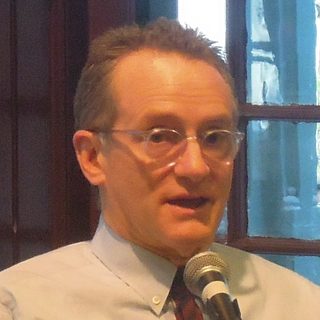
Co-founder of Oaktree Capital Management, a pioneer of distressed-debt investing and author of some of the most widely read investment memos.
Life story
Howard Marks was born in New York City in 1946 and grew up in Queens. His family was ethnically Jewish, but he was raised as a Christian Scientist. Public sources say little about his parents' occupations or his childhood.
He graduated cum laude from the Wharton School of the University of Pennsylvania in 1967 with a finance focus, and earned an MBA in accounting and marketing from the University of Chicago in 1969. He became a CFA charterholder in 1975.
How they got started
Marks started at Citicorp in 1969 as an equity research analyst and rose to director of research and vice president. In 1980 he moved to Los Angeles to run a high-yield ("junk") bond fund — a young asset class at the time.
In 1985 he joined TCW Group, leading its high-yield and convertible groups, and in 1988 organized one of the first major distressed-debt funds. When TCW declined to let the team operate independently, Marks, Bruce Karsh and three colleagues founded Oaktree Capital Management in Los Angeles in 1995.
Oaktree became one of the world's largest distressed-debt investors. It listed on the NYSE in 2012; in 2019 Brookfield Asset Management bought 62% for about $4.7B, and in October 2025 Brookfield agreed to acquire the remaining stake for about $3B. Marks shares his thinking in client memos — Warren Buffett has said they are the first thing he opens in his mail — and wrote "The Most Important Thing" (2011) and "Mastering the Market Cycle" (2018).
Investment style
For Marks, risk control and investor psychology come first. He prefers a "high batting average" to home runs: lose less in bear markets and accept average results in bull markets. He believes markets move in cycles and that investors should keep dry powder to act when others panic.
Oaktree's core business is credit — high-yield bonds, distressed debt and private equity. The stocks in its 13F are therefore often companies that went through restructurings or were acquired via debt, rather than a classic stock-picker's portfolio.
Best decisions
Record fund in the 2008 crisis
During the financial crisis Oaktree raised a $10.9B distressed-debt fund, the largest of its kind at the time, buying discounted debt at the height of the panic.
Long-term record
According to Wikipedia, Oaktree's distressed-debt funds averaged about 19% a year after fees over the 22 years to 2011.
Restructuring the firm at the right time
The 2019 Brookfield deal brought capital and global reach while the Oaktree team kept a 38% stake and operational control.
Biggest mistakes
A hasty call on bitcoin
In a 2017 memo Marks was sharply skeptical of cryptocurrencies. In his January 2021 memo "Something of Value" he openly admitted that this skeptical view had not borne out and credited conversations with his son Andrew for rethinking it.
Today
In 2026 Marks is about 80 and still active at Oaktree, continuing to write his memos. Day-to-day leadership has been with co-CEOs Robert O'Leary and Armen Panossian since June 2023. Oaktree managed about $223B at the end of 2025, and in October 2025 Brookfield agreed to buy the rest of the firm.
What to learn from following the portfolio
- Oaktree's 13F shows only a small slice of the firm: its core credit and private-lending business does not appear in 13F filings.
- The listed stocks are often restructured, heavily indebted or cyclical names (shipping, energy, financials) — such companies frequently fail halal screening. Check each position's halal status on the Portfolio tab.
- The most useful thing to follow is Marks' memos: they help you judge where we are in the cycle — euphoria or fear.
- 13F filings arrive up to 45 days late and show only long US equities — blindly copying is not a strategy.
An introduction based on public sources — not investment advice. Spotted an error? Let us know.