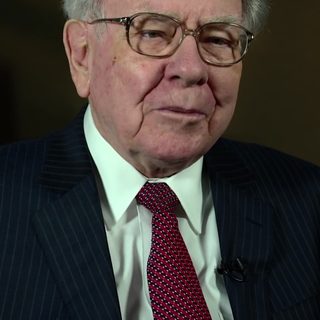
The most famous value investor in history, who turned Berkshire Hathaway from a textile mill into one of the world's largest conglomerates.
Life story
Warren Buffett was born in 1930 in Omaha, Nebraska. His father, Howard Buffett, was a businessman who later served in the U.S. Congress; his mother was Leila Stahl Buffett. His interest in money started early: at seven he borrowed "One Thousand Ways to Make $1000" from the library, and as a boy he sold chewing gum, Coca-Cola and magazines door to door and worked in his grandfather's grocery store.
He bought his first stock (Cities Service preferred) at 11. As a teenager he delivered the Washington Post, ran a small pinball-machine business and bought a 40-acre farm at 14. After two years at Wharton he graduated from the University of Nebraska in 1951. Benjamin Graham's "The Intelligent Investor" changed his life: he enrolled at Columbia Business School, where Graham taught, and earned a master's degree in 1951.
How they got started
Buffett worked as a salesman at Buffett-Falk & Co. in Omaha from 1951 to 1954, then joined his mentor's firm, Graham-Newman, as an analyst in 1954. In 1956 he returned to Omaha and started the Buffett Partnership. In 1959 he met his lifelong partner Charlie Munger. From 1962 he bought shares of the textile maker Berkshire Hathaway, took control in 1965 and became chairman and CEO in 1970.
Because textiles were a poor business, Buffett redirected the company's capital into insurance, buying National Indemnity in 1967. Insurance "float" — premiums collected but not yet paid out as claims — became Berkshire's cheap source of investment capital. Over the following decades Berkshire bought See's Candies (1972), the rest of GEICO (1996), General Re (1998), BNSF railroad (2009–2010) and Precision Castparts (2016) outright, and built large stakes in companies such as Coca-Cola, American Express and Apple.
Charlie Munger (1924–2023), a lawyer and investor, was Berkshire's vice chairman from 1978. Buffett called him the "architect" of modern Berkshire: Munger pushed him away from cheap but mediocre businesses toward wonderful businesses bought at fair prices. Munger died in November 2023 at 99. The result: Berkshire's market value per share compounded at 19.9% a year from 1965 to 2024, versus 10.4% for the S&P 500 with dividends.
Investment style
Buffett buys businesses he understands, with a durable competitive advantage (a "moat") and honest, capable management, at a sensible price — and holds them for years, sometimes decades. His famous line: the ideal holding period is "forever." The portfolio is highly concentrated in a handful of best ideas. He long avoided technology, but valued Apple as a consumer-products company with fiercely loyal customers rather than as a tech stock.
He does not forecast markets and is willing to sit on a large cash pile when bargains are scarce. He also prefers buying whole companies — so much of Berkshire's value sits in wholly owned subsidiaries (insurance, rail, energy) that never appear in a 13F filing.
Best decisions
See's Candies (1972)
Berkshire bought the chocolate maker for $25 million. Needing little capital, it threw off large amounts of cash — more than $2 billion for Berkshire by 2019. Buffett says it taught him the value of a truly great business.
Coca-Cola (1988)
In 1988 Buffett began buying Coca-Cola, eventually owning about 7% for $1.02 billion. It became one of Berkshire's most profitable and longest-held investments.
GEICO
In 1951 the student Buffett visited GEICO's office on a Saturday, talked insurance for hours with a vice president and made his first purchase. In 1996 Berkshire bought the remaining 49% for $2.3 billion. In his 2024 letter Buffett named GEICO among the best business decisions of his life.
Apple (from 2016)
Berkshire began buying Apple in 2016 and built it into its largest holding. A large part of the stake was sold in 2024, also at a very large gain.
Japanese trading houses (2019–2020)
Berkshire bought more than 5% of each of Japan's five largest trading companies (Itochu, Mitsubishi, Mitsui, Sumitomo, Marubeni) — a rare large move outside the U.S.
Biggest mistakes
Berkshire Hathaway itself (1965)
Buffett has called buying the textile company his "worst trade": the business struggled for years and the last mills closed in 1985.
Dexter Shoe (1993)
Buffett bought the shoe company with $433 million of Berkshire stock. Its competitive edge vanished within a few years, and because he paid in stock, the true cost to shareholders reached $3.5 billion by his 2007 count. He called it his "worst deal."
Airlines (2016–2020)
Having once called airlines a "deathtrap for investors," Buffett invested heavily in the four big U.S. carriers in 2016 and sold them all at a loss in April 2020 as the pandemic hit.
Kraft Heinz and IBM
Buffett said in 2019 that Berkshire overpaid in the 2015 Kraft Heinz merger. The ~$11 billion IBM stake bought in 2011 disappointed and was fully sold by 2018.
Today
In May 2025 Buffett recommended Greg Abel as his successor, and Abel became Berkshire's president and CEO on January 1, 2026. Abel (born 1962 in Canada) previously ran Berkshire Hathaway Energy and had been vice chairman for non-insurance operations since 2018. Early deals under him include OxyChem (January 2026, $9.7 billion) and an agreement to buy homebuilder Taylor Morrison (May 2026).
On September 18, 2026, the 96-year-old Buffett also stepped down as chairman; his son Howard Buffett became chairman, while Warren remains a director. He has pledged 99% of his fortune to philanthropy; in 2026 he ended his gifts to the Gates Foundation and redirected future giving to his family's foundations.
What to learn from following the portfolio
- Berkshire's portfolio is a long-term signal: new positions and meaningful additions are usually made for years, so the most useful information is which companies are bought consistently over several quarters.
- Be careful: 13F filings arrive up to 45 days after quarter-end and show only long U.S. stock positions; Berkshire's wholly owned subsidiaries and cash are invisible. Some positions may have been picked by other investment managers rather than Buffett.
- Since 2026 decisions are made by the team led by Greg Abel — it helps to separate legacy "Buffett picks" from new-era decisions.
- Halal lens: Berkshire's traditional favorites — banks, insurance, financial services and heavily indebted companies — usually fail halal screening, while consumer, technology and industrial positions may pass. Check each position's halal status in the Portfolio tab.
- Copying blindly is not a strategy: Buffett bought at his price and his time — you still need your own judgment on today's price and situation.
An introduction based on public sources — not investment advice. Spotted an error? Let us know.