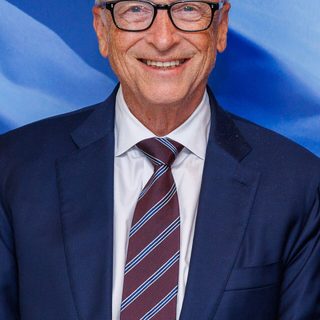
The trust that holds the endowment of the Gates Foundation, one of the world's largest philanthropic foundations.
Life story
Bill Gates was born in 1955 in Seattle. His father was a prominent lawyer; his mother, Mary Maxwell Gates, served on the boards of a bank and United Way. At Lakeside School he befriended Paul Allen and discovered computers. He entered Harvard in 1973 but dropped out in 1975 to co-found Microsoft with Allen.
The foundation began in 1994 as the William H. Gates Foundation and became the Bill & Melinda Gates Foundation in 2000. In 2006 it was split in two: the foundation that makes grants, and the trust that manages the endowment assets — it is the trust that files the 13F.
How they got started
The trust's investments are overseen not by Bill Gates himself but by Michael Larson, who since 1994 has run Cascade Investment, Gates's private investment office. Larson (born 1959) studied at Claremont McKenna College and the University of Chicago (MBA), worked at ARCO and Putnam Investments, and keeps an extremely low profile.
In 2006 Warren Buffett pledged to give the foundation Berkshire Hathaway shares in annual installments and became one of its largest donors (about $48 billion in total). He left the board of trustees in 2021 and ended his gifts to the foundation in 2026. Melinda French Gates resigned as co-chair in 2024, and the foundation was renamed the "Gates Foundation" in January 2025.
Investment style
The trust exists to provide a steady flow of money for charitable programs, so its portfolio is long-term and conservative, unlike a typical hedge fund. Its U.S. stock holdings have historically been dominated by Berkshire shares donated by Buffett; because Buffett's gifts arrived as Berkshire stock, the trust has sold those shares over time to fund grants.
Today
In May 2025 Bill Gates announced that the foundation will close on December 31, 2045 and spend its remaining resources by then. The trust is therefore expected to gradually turn assets into cash for grants over the coming years. Bill Gates is chair and Mark Suzman is CEO.
What to learn from following the portfolio
- This is a charitable trust: many sales reflect grant funding needs or planned sales of donated Berkshire shares rather than an investment view — don't rush to read them as negative signals.
- With a 2045 wind-down, the portfolio is expected to shrink; large new purchases are rare, which makes them more noteworthy.
- Some industrial and consumer holdings may be halal, while financial and insurance conglomerates like Berkshire usually are not. Check each position's halal status in the Portfolio tab.
- 13F data lags up to 45 days; the trust's non-U.S. and private investments are not shown.
An introduction based on public sources — not investment advice. Spotted an error? Let us know.