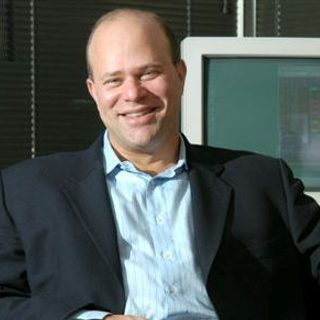
Founder of Appaloosa who built a fortune buying what others fled in a crisis — and owner of the Carolina Panthers.
Life story
David Tepper was born in 1957 in Pittsburgh. His father, Harry, was an accountant and his mother, Roberta, an elementary school teacher. He earned a BA in economics from the University of Pittsburgh (1978) and then a master's in industrial administration from Carnegie Mellon (1982).
He later gave Carnegie Mellon a total of $125 million, and its business school is named the Tepper School of Business.
How they got started
Tepper started as a credit analyst at Equibank, then worked at Republic Steel (1982) and Keystone Mutual Funds in Boston (1984). In 1985 he joined Goldman Sachs' newly formed high-yield group as a credit analyst and within six months became head trader, focusing on bankruptcies and special situations. During the 1987 crash he bought bonds from institutions hurt by the crash, which recovered when markets rebounded.
Passed over twice for partner at Goldman (partly because his loud, blunt manner clashed with the firm's culture), he left in December 1992 and in early 1993 founded Appaloosa Management with Jack Walton. Through the 1990s it was essentially a junk-bond boutique; in 2001 it returned 61% on distressed bonds.
In 2018 Tepper bought the NFL's Carolina Panthers for $2.2 billion, and in 2019 he was awarded the Charlotte FC MLS franchise.
Investment style
Tepper's signature is stepping in when fear peaks: debt of companies near bankruptcy, crisis-hit stocks and assets others are dumping. He can reshape the portfolio quickly based on his macro view, for example of central bank policy.
Appaloosa invests in stocks, bonds, options and futures. He takes big positions when convinced but is quick to exit when the picture changes.
Best decisions
The bank trade (2009)
In February–March 2009, when the financial system's collapse was feared, Tepper bought crisis-hit bank stocks such as Bank of America (around $3). The fund made about $7 billion that year and returned 132% net to investors.
Distressed bonds (2001–2002)
A 61% return in 2001 from distressed bonds; in 2002 debt of Conseco and Marconi delivered large gains.
After the 1987 crash (Goldman years)
At Goldman he bought bonds cheaply from institutions hurt by the crash; the decisions paid off when markets recovered.
Biggest mistakes
Missing partnership at Goldman (early 1990s)
Being passed over twice was a major setback at the time — but it is exactly what pushed him to start his own fund.
A rare losing year (2018)
Appaloosa finished 2018 slightly in the red (though ahead of the S&P 500's 4.4% decline), which kept Tepper off the top-earners list for the first time in seven years.
Today
In 2019 Tepper announced he would return outside capital and turn Appaloosa into what is essentially a family office managing his own money, preferring to compound his own capital rather than earn fees. The firm is still SEC-registered and files 13Fs; it moved its headquarters to Miami Beach in 2016.
At 69 in 2026, Tepper owns the Carolina Panthers and Charlotte FC and remains one of America's wealthiest investors.
What to learn from following the portfolio
- Appaloosa now manages mostly Tepper's own money, so 13F positions reflect real conviction backed by his own capital.
- He trades around his macro view and can build and sell large stakes within a quarter or two. With 13Fs up to 45 days late, copying is especially risky.
- A 13F shows only stocks and some options; his bond and other debt positions are not visible.
- From a halal perspective: Tepper made much of his money in banks and financials (such as the 2009 trade), which are usually not halal; technology and consumer names are more likely to pass screening — check each position's halal status in the Portfolio tab.
An introduction based on public sources — not investment advice. Spotted an error? Let us know.