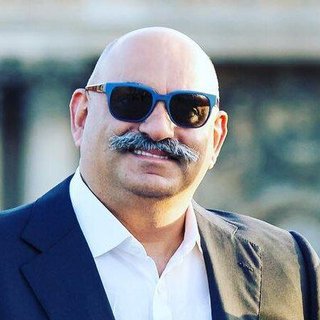
Indian-born American value investor and founder of Pabrai Investment Funds, known for openly "cloning" Warren Buffett's approach.
Life story
Mohnish Pabrai was born in Mumbai on June 12, 1964. According to Wikipedia, his father started many businesses over his life — some went bankrupt, others were sold — and his grandfather was the famous Indian magician Gogia Pasha. Pabrai has said his father's example taught him to "crack" business models quickly.
He came to the US to study and graduated in computer engineering from Clemson University, then worked in hardware design and technology sales.
How they got started
From 1986 to 1991 Pabrai worked at telecom equipment maker Tellabs. In 1991 he started an IT consulting firm, TransTech, funded with $30,000 from his 401(k) and $70,000 of credit-card debt, and sold it to Kurt Salmon Associates in 2000.
He discovered investing in 1994 through Peter Lynch's books and then studied Warren Buffett intensively. In 1999 he launched Pabrai Investment Funds with about $1.1 million from eight friends and himself, structuring it after Buffett's partnerships of the 1950s–60s.
In 2007 he and his friend Guy Spier paid $650,100 for a charity lunch with Buffett. He wrote "The Dhandho Investor", and in 2005 co-founded the Dakshana Foundation, which prepares students from poor Indian families for elite schools such as the IITs.
Investment style
Pabrai openly calls his method "cloning": studying Buffett, Munger and other great value investors and copying their best ideas. He looks for situations where the downside is small and the upside large.
His portfolio is typically very narrow, concentrated in a handful of positions, sometimes with a big bet on a single theme (for example metallurgical coal). He trades rarely, rejects most ideas and sticks to businesses he understands.
Best decisions
Long-term record (1999–2019)
In a 2019 interview Pabrai said $100,000 invested at the fund's inception had grown to about $1.2 million by June 2019 — roughly 13.3% a year versus about 7.0% for the Dow.
Metallurgical coal (2020s)
Pabrai made a large bet on met-coal producers such as Alpha Metallurgical Resources. InvestorPlace reported in July 2024 that about 90% of his US portfolio sat in three coal stocks and that AMR traded about 78% above his average purchase price.
Biggest mistakes
2008–2009 financial crisis
Pabrai has admitted to heavy bets on leveraged financial firms, including subprime mortgage lenders, some of which went to zero. By his own account his funds fell about 70% peak to trough over 2007–2009.
Horsehead Holding (2015–2016)
Zinc producer Horsehead's new plant, begun in 2011, cost $500 million instead of $350 million and was running at only 25% capacity after 18 months; the company filed for Chapter 11 in early 2016. Pabrai's fund fell about 20% in 2015, largely because of this position.
Today
In 2026 Pabrai is 62 and remains managing partner of Pabrai Investment Funds, whose office is in Texas (Austin area). He continues his work with the Dakshana Foundation.
Note: much of Pabrai's capital is invested in India and other non-US markets — the 13F (filed by Dalal Street, LLC) shows only the US-listed part.
What to learn from following the portfolio
- Pabrai's 13F portfolio is very concentrated — a new position or a sharp increase is a strong conviction signal, but his habit of betting on one theme also raises risk.
- The 13F shows only US stocks with a 45-day lag — his main Indian holdings are invisible here, so this is not the full picture.
- He is a "cloner" himself: rather than copying him, it is more useful to study why he chose a particular business.
- Halal lens: his history includes banks and highly leveraged companies — sectors that often fail halal screening. Check each position's halal status in the Portfolio tab.
An introduction based on public sources — not investment advice. Spotted an error? Let us know.