 since 1947
By the numbers: if you had invested $1,000
5 years ago
$20 750
from Oct 2021 · +83% a year on average
10 years ago
$17 826
from Oct 2016 · +33% a year on average
20 years ago
$28 500
from Oct 2006 · +18% a year on average
Entire listed history
$273 262
from Mar 1980 · +13% a year on average
Deepest drawdown
-91%
from the Nov 1980 peak to Dec 1987
Now vs. peak
-42%
Jun 2026
Price history — log scale: equal height means equal percentage change
Numbers on the chart match events in the timeline.
Based on monthly closes with dividends reinvested (source: Yahoo Finance, POWL). Past performance does not guarantee future results.
Metal boxes nobody looks at
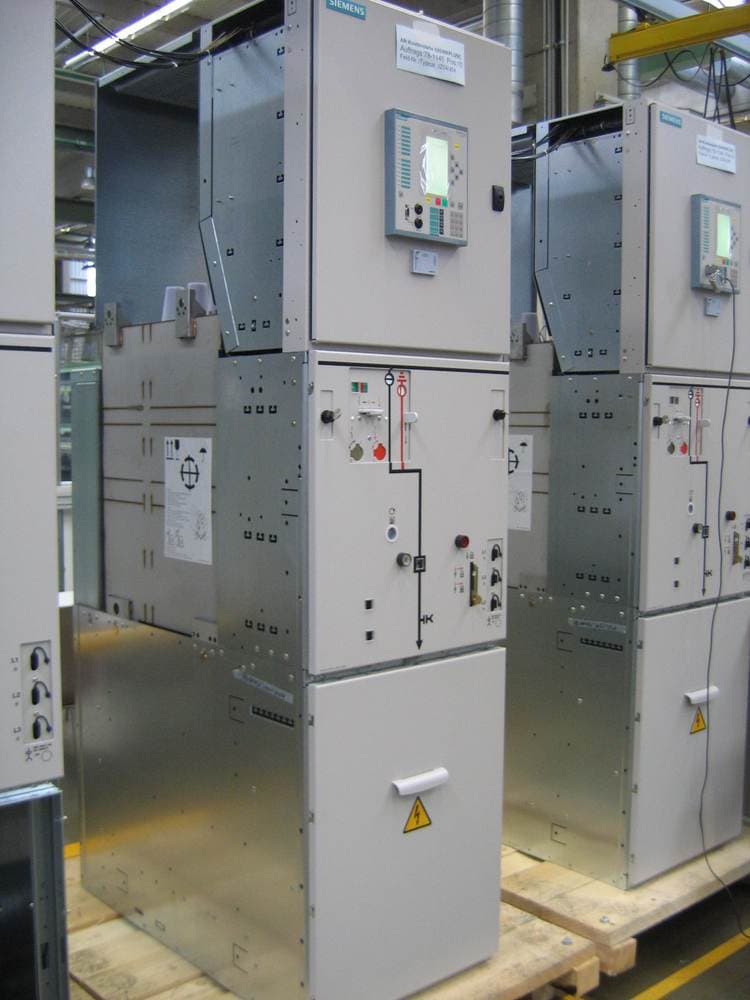
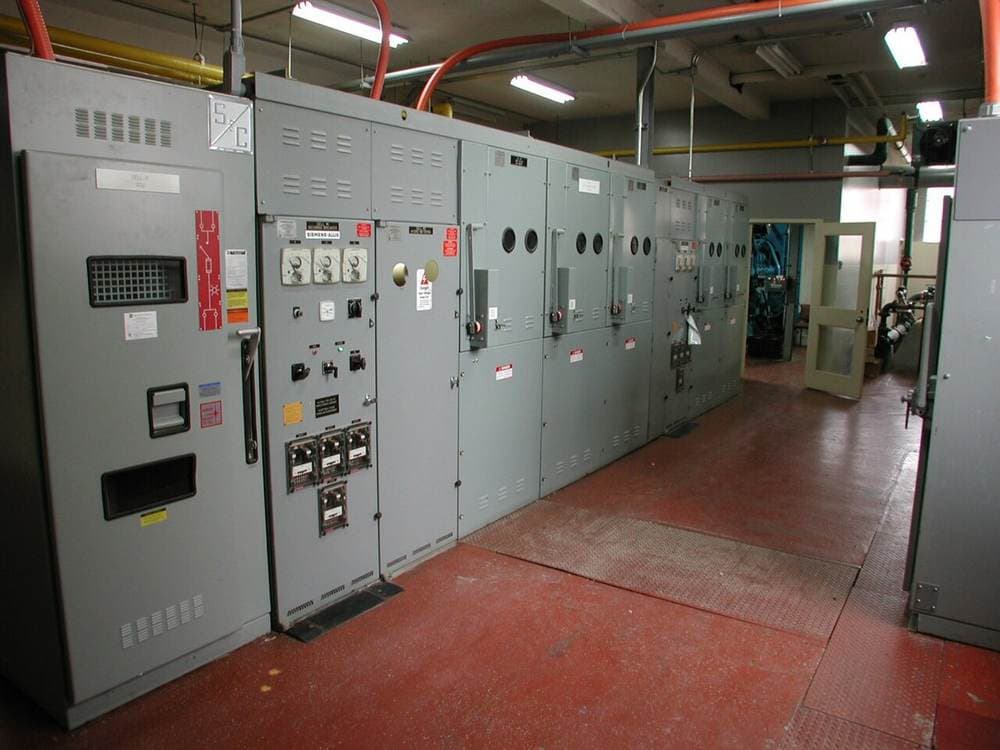
In a corner of every big factory, gas terminal or data center stands a row of grey metal cabinets. Inside are switches, breakers and protective relays. They distribute high-voltage power from the grid safely, and if there is a short circuit they cut the current before a fire starts. This equipment is called switchgear. Nobody photographs it, and nobody talks about it.
Houston-based Powell Industries makes exactly this kind of equipment — and something even bigger: entire "electrical rooms". In 2024 the company had about 2,700 full-time employees. It is not Apple, and it is not Nvidia.
Now look at the number. On April 11, 2022, Powell stock closed at $6.30 (adjusted for the 2026 3-for-1 split; the actual price that day was about $18.90). On May 11, 2026, it closed at $322.05. That is roughly 51x, in just over four years. $1,000 invested that day would have been worth about $51,000 at the peak.
How did a 75-year-old "boring" industrial company pull that off? To answer, we first go back to Houston in 1947.
A workshop next to the petrochemical plants
Powell Industries was founded in 1947 by William E. Powell. It began in Houston as a small metalworking shop serving the city's petrochemical plants. The Texas Gulf Coast — the heart of the US oil and gas industry — was a natural market for Powell.
Over the years the workshop learned more complex work. In 1968 the company developed the PCR (Power Control Room) concept for a Union Carbide project in Puerto Rico. The idea is simple but powerful: instead of assembling all the electrical equipment piece by piece on the construction site, install it inside a ready-made building at the factory, test it, and then ship the whole thing to the site by truck or barge. Today such modules are also called E-Houses.
Powell's products are not standard — each one is engineered for a specific project. That is both a strength and a weakness: when a customer builds a big plant, Powell gets a big order; when construction stops, orders stop too.
And in the 2010s, that is exactly what happened.

The lost decade
In 2013–2014 Powell stock traded around $23 (split-adjusted). Then oil prices collapsed, oil and gas companies froze new projects, and Powell's orders dried up.
The result: in April 2022 the stock was at $6.30 — about four times cheaper than in 2014 and back at 2005 levels. An investor who held for eight years had lost most of their money.
The financials weren't inspiring either. In fiscal 2022 (Powell's fiscal year ends September 30) the company earned just $13.7 million of net income on $532.6 million of sales. Gross margin was 16.0%. In other words, out of every $100 of sales, $16 was left after materials and production costs — and after offices, engineers and other expenses, almost nothing remained.
The market priced Powell as "a supplier stuck in oil and gas's past". What nobody noticed: the order book had already started to grow.
Orders double: LNG and megaprojects
After 2022 large projects returned to Powell's traditional markets — especially liquefied natural gas (LNG) plants and petrochemical complexes. Each of these plants needs massive electrical infrastructure — exactly what Powell makes.
Fiscal 2023 made it clear:
- New orders: $1.4 billion — almost double the prior year's $718 million.
- Backlog: from $592 million to $1.3 billion — up 118%.
- Sales: $699 million (+31%); net income $54.5 million, about four times the previous year.
The company attributed its fourth-quarter revenue growth mainly to LNG projects. CEO Brett A. Cope highlighted that Powell was awarded $1.4 billion of new orders in fiscal 2023, almost double the prior-year total.
But for investors, sales were not the most important number. The most important one was the margin.

Margin — the hidden engine
The factory stays the same: buildings, machines, engineers. If it receives twice as many orders, costs don't double — the profit left over from each extra cabinet grows. Add another factor: when demand is strong, a company can turn down unprofitable projects and ask for better prices.
At Powell, both happened at once:
- Gross margin: fiscal 2022 — 16.0%, 2023 — 21.1%, 2024 — 27.0%, 2025 — 29.4%.
- Sales: $533M → $699M → $1.01B → $1.10B.
- Net income: $13.7M → $54.5M → $149.8M → $180.7M.
Notice: in three years sales roughly doubled, while net income grew about 13x. The rest of the stock's 51x came from the market's changed attitude: investors were now willing to pay several times more for each dollar of profit.
The stock leapt on report days: +40% in a single day on August 2, 2023, +45% on January 31, 2024, +38% on July 31, 2024. On November 11, 2024, it reached $117.46 — nearly 19x from the 2022 low in just over two and a half years.
The data-center door opens
With its fiscal 2024 results, Brett Cope said the company kept growing in its traditional markets — oil and gas, petrochemical and electric utilities — while further diversifying into markets such as data centers, hydrogen and carbon capture. In fiscal 2025 he called customer activity in the data-center market "highly encouraging", with opportunities growing in both size and volume. That year Powell also bought Remsdaq, a UK maker of remote control equipment for substations.
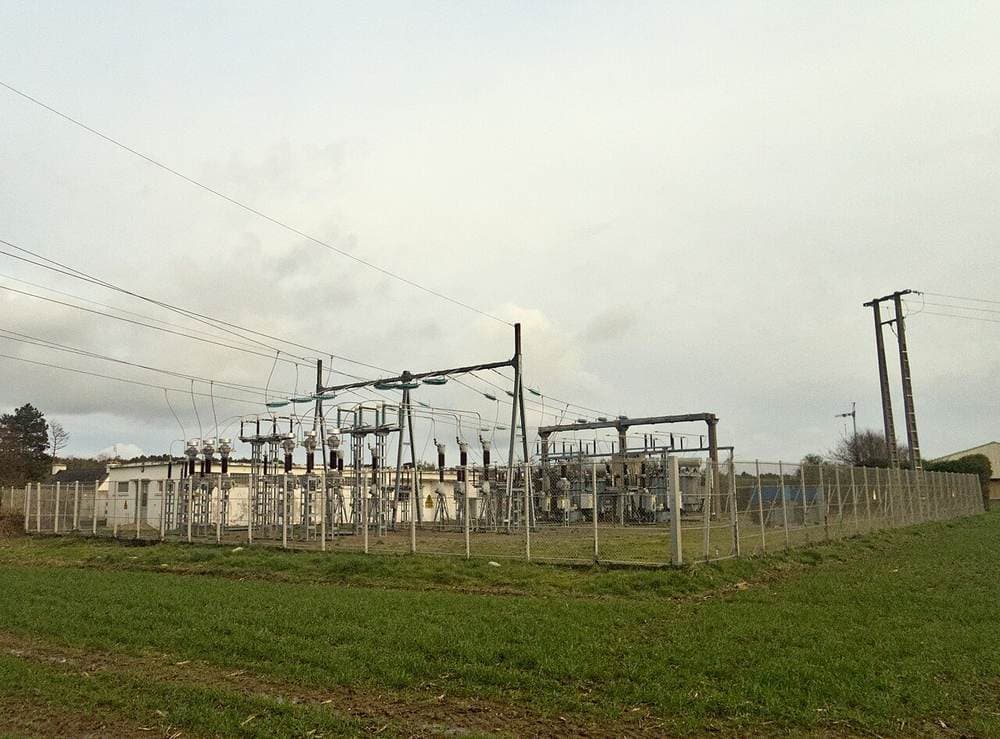
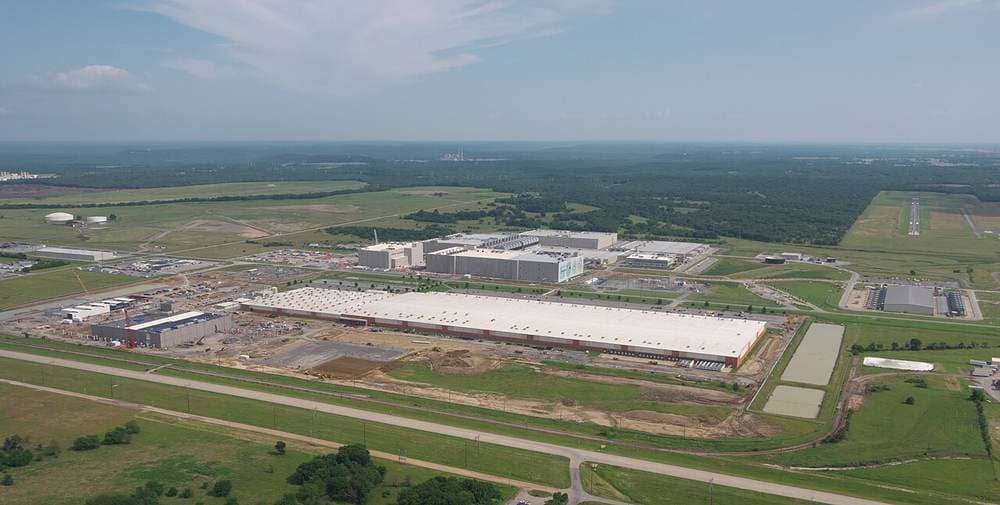
AI data centers are enormous consumers of electricity. Sometimes the local grid cannot supply them fast enough, and an on-site power plant has to be built next to the data center. Connecting that plant to the grid and the servers requires — once again — switchgear and electrical rooms.
On May 4, 2026, Powell reported its fiscal second-quarter results: new orders of $490 million (up 97% year over year) and a backlog of $1.8 billion. After the quarter closed, the company won a data-center order worth more than $400 million — a behind-the-meter design for on-site power generation. Cope called it the largest order in Powell's history.
Meanwhile the stock had become so expensive that the company carried out a 3-for-1 split in April 2026. On May 11 the stock peaked at $322.05.
Cut in half — twice: the price of a multibagger
The 51x gain did not come in a straight line:
- November 2024 → March 2025. From $117.46 to $51.85 — down about 56%. The stock lost more than half its value — in the same period other data-center-linked stocks, such as Vertiv, also fell sharply.
- May → September 2026. From the $322.05 peak to $170.51 — down about 47%.
There are risks too, and they come from the nature of the business:
- Project dependence. Powell's revenue depends on a handful of large projects. In fiscal 2024 new orders fell 24%, because the previous year had included three very large megaprojects. Years like that can happen again.
- The oil and gas cycle. In fiscal 2024 about 41% of sales came from oil and gas and another 18% from petrochemicals. A downturn like 2014–2022 could happen again.
- Valuation. Profit grew 13x, the stock 51x. The market has priced in big hopes for the future — if they don't materialize, the price can fall fast.
And the hardest truth: buying Powell in 2022 meant trusting a stock that had been falling for eight years. Then you had to not sell it through two drops of roughly half.
What this story teaches
- 1
A "boring" business can be a multibagger too
Powell didn't invent any new technology. It made the same kind of product for 75 years — until one day a lot of people suddenly needed it at once. Sometimes the best opportunity hides in an industry everyone has forgotten.
- 2
The order book is news from the future
In 2023 Powell's backlog more than doubled, and that came before the growth in sales and profit. For project-based companies, orders and backlog are the earliest signal of future revenue.
- 3
Margin expansion multiplies profit
Sales grew ~2x, profit ~13x. When factory capacity is fully used and a company can set its prices, every extra dollar of sales brings a lot of profit. Watch not only sales growth but the direction of margins.
- 4
Small company — big swings
Powell stock rose 40–45% in a single day and lost more than half its value over a few months. Swings like that are normal for small companies. Size your position so that a -50% drop doesn't force you to sell.
- 5
For the halal investor
Powell's core business — electrical equipment — is not a prohibited industry in itself, but halal status also depends on financial ratios and can change over time. Check its current status on the POWL page.
Today
Halal status
HalalThe status is re-checked after every quarterly report and may change.
Superinvestors
SEC 13F, 2026 Q3. Up to 45 days delayed.Held by 1 superinvestors · Average reported price: $286.36
- Polen Capital Management$8.4M0.1%
Timeline
1947
William E. Powell opens a metalworking shop in Houston
1968
PCR (Power Control Room) concept developed for a Union Carbide project
- 1
2014
Stock ~$23 (split-adjusted) — then the oil and gas downturn begins
- 2
2022-04
The bottom: $6.30 (split-adjusted)
- 3
2022-09
Fiscal 2022: net income $13.7M, gross margin 16%
- 4
2023-08
Stock +40% in one day after earnings
- 5
2023-09
Fiscal 2023: orders $1.4B, backlog $1.3B
- 6
2024-01
Stock +45% in one day after earnings
- 7
2024-09
Sales top $1B, net income $149.8M
- 8
2024-11
Interim peak: $117.46 — ~19x from the low
- 9
2025-03
~-56% from the peak ($51.85)
- 10
2025-09
Fiscal 2025: net income $180.7M, gross margin 29.4%
- 11
2026-04
3-for-1 stock split
- 12
2026-05
Largest order in company history (>$400M, data center); peak $322.05 — ~51x
- 13
2026-09
~-47% from the peak ($170.51)
Frequently asked questions
What does Powell Industries make?+
Powell makes custom-engineered equipment to distribute and control electrical power: switchgear, factory-built electrical rooms (PCRs, E-Houses), motor control systems and more. Its customers are in oil and gas and LNG, petrochemicals, electric utilities and data centers.
How many times did Powell stock grow?+
According to split-adjusted Yahoo data, the stock closed at $6.30 on April 11, 2022 and at $322.05 on May 11, 2026 — roughly 51x in just over four years. By November 2024, about two and a half years in, it had already grown about 19x.
Why did Powell grow so fast?+
LNG and petrochemical megaprojects doubled its orders; its factories filled up and gross margin rose from 16% to 29%, so profit grew about 13x in three years; then data centers became a new source of demand and the market began valuing the company much more highly.
Is Powell stock halal?+
Halal status depends on the company's business and financial ratios and can change over time. See the current status on the POWL page on limitup.
For every super-company there are dozens that never made it. For balance, read the Fallen giants stories too. Fallen giants →
Find companies like these yourself
Limitup covers the halal status, financials, superinvestor portfolios and a screener for thousands of US stocks. Check the signs from these stories in today's companies.
Read next
The Vertiv story: how a "boring" air-conditioning business rose 45x in four years
In the summer of 2022 nobody wanted this $8 stock — less than four years later it hit $376. The secret: AI chips run extremely hot, and Vertiv makes the equipment that cools and powers them.
8 min read
Nvidia tarixi: bankrotlikka 30 kun qolgan kompaniyadan dunyoning eng qimmat kompaniyasigacha
Yo'l bo'yidagi oshxonada tug'ilgan, bir necha marta o'limga yaqin kelgan va oxiri sun'iy intellekt davrining asosiy "belkurak sotuvchisi"ga aylangan kompaniya.
8 min read
Monster Beverage tarixi: sharbat sotgan kichik kompaniya qanday qilib Apple va Nvidia'dan ham ko'proq o'sdi
Texnologiya ham, ixtiro ham yo'q — faqat energetik ichimlik, kattaroq banka va to'g'ri hamkor. Lekin 2000-yildan beri AQShda eng ko'p o'sgan aksiyalardan biri aynan shu.
5 min read
The Super Micro story: the server maker that rose 35x in two years and fell 86% in eight months
The AI boom turned an ordinary server assembler into a Wall Street star. Then its auditor resigned — and it turned out this was not the company's first reporting problem.
10 min read