 since 2016
By the numbers: if you had invested $1,000
Entire listed history
$58 376
from Sep 2023 · +274% a year on average
Deepest drawdown
-66%
from the Jun 2025 peak to Nov 2025
Now vs. peak
-29%
Jun 2025
Price history — log scale: equal height means equal percentage change
Numbers on the chart match events in the timeline.
Based on monthly closes with dividends reinvested (source: Yahoo Finance, SEZL). Past performance does not guarantee future results.
A dollar and change
Late October 2023. Shares of Sezzle, a small payments company from Minneapolis, began trading on Nasdaq a month earlier, but even that "debut" went badly: the price keeps sliding. During the week the stock drops to about $1.19 (adjusted for the 6-for-1 split of 2025).
Hardly anyone talked about this company. After the 2021 hype, "buy now, pay later" (BNPL) had a poor reputation with investors: rates were up, the big players were losing money, and smaller ones were being sold or shutting down.
What happened over the next 21 months became one of the sharpest rallies on the US market in recent years. In July 2025 Sezzle stock reached ~$187 — about 157 times its October 2023 low. $1,000 invested at the worst moment would have turned into more than $150,000 in under two years (based on intraday lows and highs in Yahoo's weekly data; in practice nobody catches such exact points).
How did this happen? Not through a brilliant new technology, but through something far more ordinary: the company stopped losing money. To understand that, start with how Sezzle makes money.

Pay in four
Sezzle was founded in Minneapolis in 2016. Co-founder and CEO Charlie Youakim had previously run a parking-payments company. In August 2017 Sezzle launched its core product in the US.
The idea is simple: you buy something from an online store but don't pay the full amount at once. The purchase is split into four payments: the first now, the other three over six weeks. The basic plan carries no interest. To approve buyers, Sezzle looks not only at credit scores but at a "soft" check, past repayment history and the purchase amount. Customers who pay on time can make larger purchases later.
This is a business of giving consumers short-term credit. Revenue comes from fees charged to merchants, fees paid by consumers (for example, for late or rescheduled payments) and, later, subscriptions. In early 2020 California's regulator treated Sezzle's activity as lending and required a lending license — which the company obtained in January 2020.
Many customers were young people who couldn't get or didn't want a credit card. That was both an opportunity and a risk for Sezzle: some of these borrowers don't pay back. That risk later moves to the center of the story.

The long detour through Australia
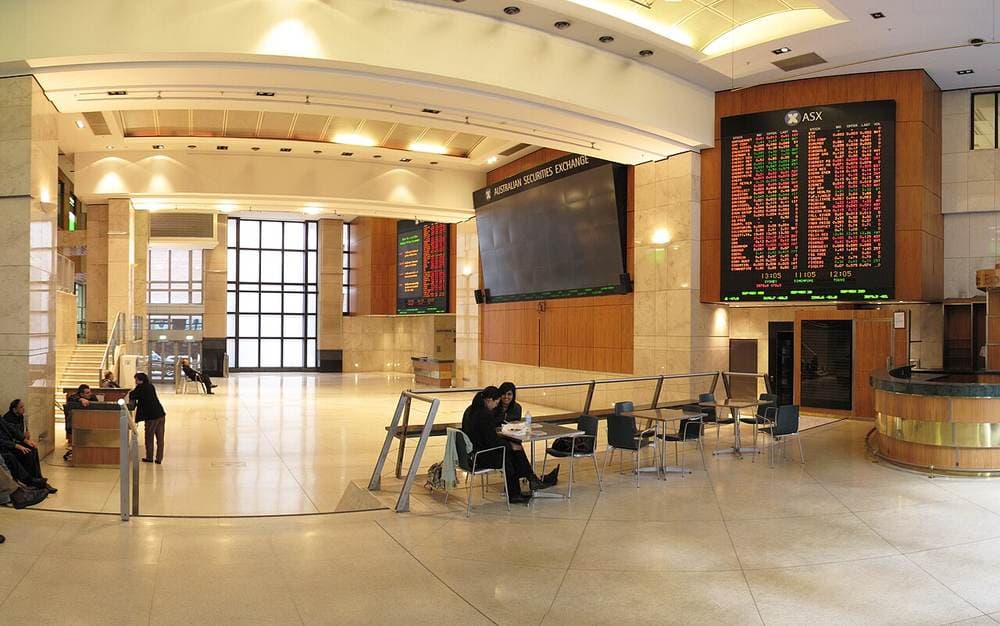
Although American, Sezzle went public... in Australia. At the time the Australian Securities Exchange (ASX) loved BNPL companies: local players Afterpay and Zip were soaring.
On July 30, 2019, Sezzle listed on the ASX at A$1.22 a share, raising about $30 million. In 2020 it reincorporated as a Public Benefit Corporation. In 2021 Target picked Sezzle as a BNPL partner, and sign-ups passed 10 million.
Then the tide turned. Rates rose, credit losses grew and BNPL stocks collapsed. As Hindenburg Research later noted, Sezzle's Australian-listed stock had fallen more than 80% by early 2022.
In February 2022 Australian rival Zip Co agreed to buy Sezzle in a deal valued at about A$491 million. It could have been a lifeline. But in July the two sides called it off; Zip paid Sezzle $11 million to cover costs.
Sezzle was on its own. Now it had to save itself.
Profit, not growth
In 2022 Sezzle changed course sharply: instead of "growth at any cost" — a profitable business.
- It dropped about 5,000 merchants and closed operations in India, Europe and Brazil.
- It tightened underwriting and parted ways with roughly 450,000 customers.
- Its provision for uncollectible accounts fell from $52.6 million in 2021 to $29.4 million in 2022, and personnel costs were cut.
The second key step was subscriptions. Sezzle began offering extra features for a monthly fee. Sezzle Anywhere, launched in 2023, let members use Sezzle at any store that accepts Visa; as of 2025 Premium cost $13.99 a month and Anywhere $19.99. Subscribers buy more and more regularly than ordinary users. As CEO Youakim put it in 2025: "When we did the math, the on-demand user tended to be a fickle customer."
The results showed in 2023: Sezzle posted its sixth straight profitable quarter and $7.1 million in net income for the year. A small number — but the direction had changed.
In August 2023 Sezzle also listed on Nasdaq. The debut was odd: on August 17 Nasdaq halted trading almost immediately because too few shares were freely tradable in the US (most were still held in Australia). Trading only resumed on September 14. In January 2024 Sezzle left the ASX entirely.
157x in 21 months
2024 was the turning point. Sezzle itself had guided to $20 million in net income for 2024. The actual result came in almost four times higher:
- Revenue: $271.1 million (+70%)
- Net income: $78.5 million — more than ten times the prior year
- Gross merchandise volume (GMV): $2.5 billion
When a small company's profit grows tenfold in a year, the market re-rates the stock accordingly. By November 2024 the shares neared ~$80 (split-adjusted) — more than 60x the low of a year earlier.
Then came the first blow. On December 18, 2024, short seller Hindenburg Research published a report on Sezzle. It alleged that some customers were enrolled in subscriptions without clear consent; that credit-loss provisions were growing far faster than the loan book; that its core customers had weak credit; and that insiders sold ~$71 million of stock in 2024. These are claims by a party holding a short position, not a regulator's finding. Still, by March 2025 the stock had fallen about 69% from its peak.
And then it reversed again. Early-2025 reports showed profits still rising; in March 2025 the company announced a 6-for-1 split and a $50 million buyback. The stock rose more than 7x in under four months, reaching ~$187 in July 2025. From ~$1.19 in October 2023 that is roughly 157x — in 21 months.
Swings and open questions
A stock that rises this fast doesn't sit still. In August 2025 Sezzle beat quarterly expectations (revenue up 76% to $98.7 million) but didn't raise its full-year outlook and flagged slower growth in the second half. The stock fell sharply after the report and lost 39% over the month. By November it was about 73% below the July peak.
The business kept growing: 2025 revenue reached $450.3 million (+66%) and net income $133.1 million, with subscribers and on-demand users at 918,000 by year-end. In 2026 the stock recovered and even topped its 2025 peak in the summer — then fell sharply again in August. Violent swings have become normal for this stock.
Several questions remain open:
- Credit quality. Many Sezzle customers have weak credit histories. If the economy slows, bad debts can rise quickly.
- Subscription practices. Subscriptions have become the main profit engine; complaints about how people sign up and cancel could draw regulators' attention.
- Competition and partners. Sezzle depends on big platforms: in June 2025 it sued Shopify, alleging antitrust violations. Competition in BNPL is fierce.
- Cost of funding. Sezzle borrows the money it lends to customers; changes in interest rates directly affect profit.
What this story teaches
- 1
The turn from loss to profit is the strongest catalyst
Sezzle didn't change its product — it cut costs, dropped unprofitable customers and added subscriptions. When a small company's profit jumps tenfold, the market re-rates it completely. Many multibaggers start with exactly this kind of turn.
- 2
Where everyone has given up, there is opportunity — and risk
In 2023 almost nobody cared about Sezzle: the sector had a bad name and the listing was a flop. That is when prices are low. But the reasons for the neglect are real too — study them before you put money in.
- 3
In lending, profit and risk travel together
A lender's profits in good years can hide losses in bad ones. Watch credit-loss provisions, the share of late payments and the cost of funding.
- 4
Don't ignore a short report — but don't believe it blindly
After the Hindenburg report the stock fell hard, then rose several-fold again. Such a report is a list of questions to investigate, not a ready verdict.
- 5
For the halal investor
Sezzle's revenue comes from fees tied to providing short-term consumer credit. A company's halal status depends on its business and financial ratios — check the current status on the SEZL page.
Today
Halal status
Not halalThe status is re-checked after every quarterly report and may change.
Timeline
2016
Sezzle founded in Minneapolis
2017-08
Pay-in-four service launches in the US
2019-07
ASX listing (A$1.22, ~$30M)
2020-01
California lending license obtained
2022-02
Merger agreement with Zip Co (~A$491M)
2022-07
Deal terminated; cost cuts and a turn to profit
- 1
2023-08
Nasdaq listing; trading halted the same day
- 2
2023-09
Nasdaq trading resumes
- 3
2023-10
Low point: ~$1.19 (split-adjusted)
- 4
2024-01
Leaves the ASX
- 5
2024-12
Hindenburg Research short report
- 6
2025-03
6-for-1 split and $50M buyback
- 7
2025-07
Peak ~$187 — ~157x
- 8
2025-08
Outlook not raised; stock falls 39% in the month
Frequently asked questions
What does Sezzle do?+
Sezzle is a US buy now, pay later (BNPL) company. It lets shoppers split a purchase into four payments over six weeks and also offers monthly subscriptions such as Sezzle Premium and Sezzle Anywhere.
How much did Sezzle stock rise?+
Based on Yahoo's weekly data, the split-adjusted price rose from ~$1.19 in October 2023 to ~$187 in July 2025 — roughly 157x in 21 months. It then fell ~73% from the peak by November 2025.
Why did Sezzle stock rise so fast?+
Mainly the turn to profit: after 2022's cost cuts and tighter underwriting, the company earned $7.1M in 2023, $78.5M in 2024 and $133.1M in 2025. Subscriptions became an important part of revenue.
Is Sezzle stock halal?+
Halal status depends on the company's business and financial ratios and can change over time. See the current status on limitup's SEZL page.
For every super-company there are dozens that never made it. For balance, read the Fallen giants stories too. Fallen giants →
Find companies like these yourself
Limitup covers the halal status, financials, superinvestor portfolios and a screener for thousands of US stocks. Check the signs from these stories in today's companies.
Read next
Shopify tarixi: sotilmagan snoubordlardan millionlab do'konlarni boshqaradigan platformagacha
Snoubord sotish uchun yozilgan bir dastur qanday qilib Amazon'ga qarshi "isyonchilar"ning quroliga va Kanadaning eng qimmat kompaniyalaridan biriga aylandi.
5 min read
Visa tarixi: 65 ming kartalik muvaffaqiyatsiz tajribadan dunyoning to'lov yo'llarigacha
Visa hech kimga qarz bermaydi va birorta karta ham chiqarmaydi. Shunga qaramay, dunyoda karta orqali qilinadigan deyarli har bir xariddan o'z ulushini oladi.
6 min read
The Upstart story: 20x in 10 months, then −97% in the next 14
An AI lending company whose stock rose 20-fold from its IPO price. Then rates went up, the money behind its loans pulled back — and almost all of it was given back.
8 min read
The Hims & Hers story: from a $2.70 SPAC stock to a ~27x run — and the storm that followed
Seeing a doctor from your phone and getting medicine delivered home barely excited anyone in 2022. In under three years the stock rose roughly 27-fold — and then fell 80% again.
7 min read